



Jane Jensen

AG: I’ve read that you have other ideas in mind for more Gabriel Knight adventures. I won’t ask you to share those (though you’re welcome to if you want!), but what about the larger story arc with Gabriel and Grace? Do you have the whole picture plotted in your mind, or were you just planning to let things evolve as they may? The end of GK3, which I won’t spoil for others, certainly suggested you had at least the next phase in mind.
JJ: I have a bit of the ‘future’ in my head, maybe through the next game. But not the entire arc. I prefer to let it develop organically. For example, I didn’t plan the end of GK3 but when I was working on the design, it just came out and felt right. So now I’ve got them in a pickle that I’d need to resolve if I ever revisit that world. And I basically know how I would resolve it in the next game but beyond that is not really formed.
AG: Is there one particular game you’ve made that stands out above the others as one you’re most happy with, or proud of? Or is that a bit too much like asking a parent to name their favourite child?
 JJ: All 3 of the GK games are ‘favorites’ to me for different reasons. GK1 because it was the first, I love origin stories and New Orleans. GK2 because it’s got a cool gothic-Bavarian-werewolf thing and it was fun to pull in the Ludwig and Wagner history. With GK3 I’m really pleased with how the complex Rennes-le-Chateau mystery was woven into the plot and I think Le Serpent Rouge is my favorite puzzle of all time. Looking back from here, I’d probably pick GK2 because the live action brought so much to it. I think it’s unfortunate that we no longer use live actors.
AG: Two of the Gabriel Knight games were also made into novels, which certainly speaks to the depth of the stories in those games. What was the process of adapting a game into a book like? And how does it compare to writing a regular novel, which you’ve also done twice? For that matter, how does writing a game compare to writing a novel? Do you prefer one over the other?
 JJ: The story building process is very similar between the games and the books, though when I know the story will become a game, I’m more conscious of trying to think of puzzles even while I’m working on the plot line. Also, for a book you have unlimited freedom to go anywhere in the world and have a billion locations, special effects, etc. Dante’s Equation, for example, could never be produced as a game. It would cost a fortune. Game stories need to be more contained. The actual process of writing is very different, though. A novel is challenging because it’s just your word on the page. You have to keep the reader entertained and sucked in — and unannoyed — just with your prose. So that’s really tough. You worry over every word. With a game, you’re writing a design for the team which will then get translated into a production so the challenge is more about getting the art and production right rather than the fussing over the actual “words”.
AG: How would you say that working at Sierra helped shape you as a game designer?
JJ: Oh, I’m sure I wouldn’t be a designer if it weren’t for Sierra. First, they gave me games that I could admire, games that made me want to be a designer. They gave me the chance to design, and I was able to mentor with very experienced game developers like Roberta Williams.
AG: How about your experience with casual games in recent years? Has that impacted your approach to Gray Matter at all?
JJ: Yes, it has changed me as a designer. I’m more conscious about keeping things approachable, not making things difficult or obscure for the glee of it. I’ve spent time watching “real people” try to play games, which is very enlightening. It’s been a good thing.
AG: How do you address the concern of people who think this more accessible approach represents a “dumbing down” of the genre?
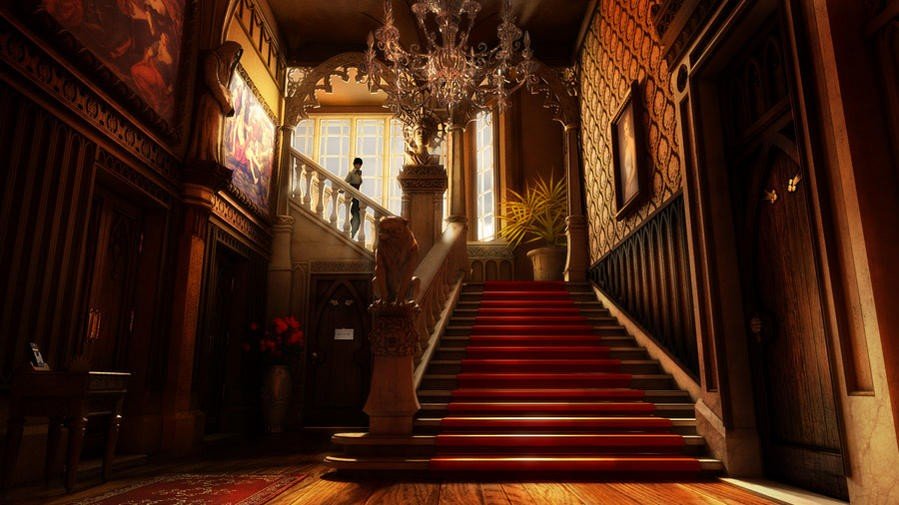
JJ: I just don’t think “good” equates to “hard”, whether it’s literature or games or movies. As a writer, it’s my job to reach an audience. Look at someone like Spielberg. He’s as approachable as they come, that doesn’t mean he’s not good. Or take a look at ‘difficult’ writers like Thomas Pynchon (Gravity’s Rainbow) or Umberto Eco. How many people have actually made it through their books? Do you have to be obtuse and hard to read to be respected as literature? That’s just not my goal. I want to grab people by the throats and give them a thrill. Similarly, I just don’t buy that a game has to be hard to play or that you need to wander around for hours without knowing what to do or have to resort to a cheat sheet in order for a game to be “good”. GK2 was one of the most popular games I did and that game had a very simple interface and puzzles because of the live action.
AG: Is there such a thing as a happy medium on the issue of difficulty?
JJ: To me the game needs to have a great, rich story, fun puzzles, it needs to flow smoothly from start to end and at no time be confusing so that you stay wrapped up in the experience rather than the process. You need to get to the end and cheer – or cry. If a hard-core gamer can’t enjoy a game like that, so be it.
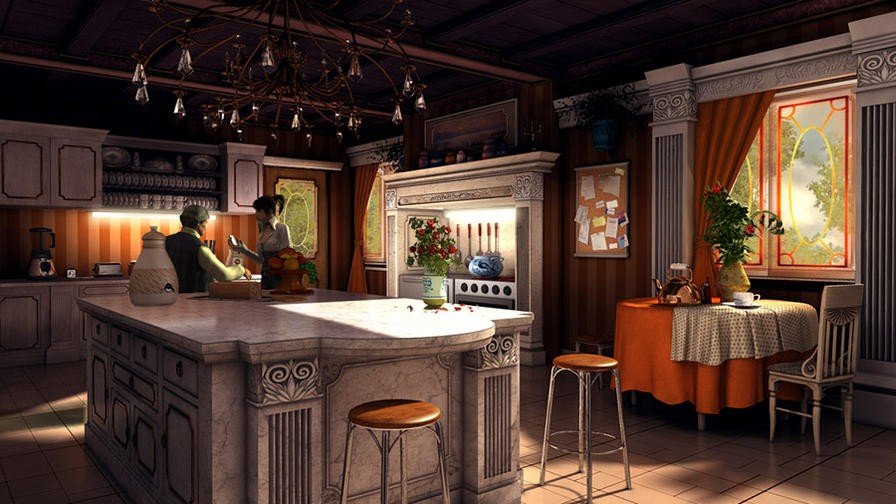
 AG: You’re also involved in the Women’s Murder Club games, based on James Patterson’s novels. What exactly is your role in that series?
JJ: I’m writing the design – stories and puzzles — and acting as creative director throughout the project. James Patterson has been great to work with. He has full review over everything.
AG: You’ve talked in the past about bridging the gap between strictly puzzle-based casual games and full-length narrative driven adventures. Will this game be another step in that direction?
JJ: It definitely is. It’s the most adventure-game like casual game Oberon has done.
AG: At the risk of some rather blatant gender stereotyping, what is it about both today’s adventure and casual games that you think appeals so strongly to women? And if you really want to go out on a limb, why do you think they don’t appeal so much to men? There are exceptions on both sides, of course, but just speaking generally.
JJ: I have a very simple view of these things. People like what they like. We have far too many choices these days to settle for playing a game just because it’s there. If you look at stats of the book industry, something like 80% of all fiction purchasers are women. Guys, not so much. The casual game numbers are similar for puzzle games—80% female. Why? Lots of sociologists have studied why boys like trucks and girls like dolls. All I know is what I like myself and that’s the kind of thing I create. If I’m trying to reach an audience, it’s most likely going to be an audience that thinks the way I do.
AG: Have you played any other recent adventures lately? Do you think the quality of today’s games measure up to the “golden era” which you helped to create?
JJ: I really haven’t. I’ve just been too busy. I do more playtesting of casual games. I miss the classic, Sierra-LucasArts adventure games a lot.
AG: Your past games have shown a meticulous degree of research. Can we expect the same from Gray Matter? In which areas did you do most of your research for the new game?
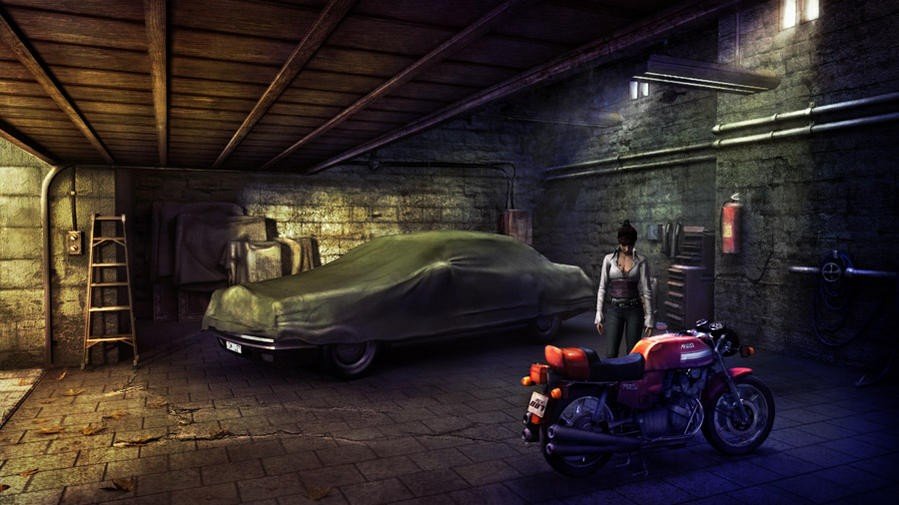
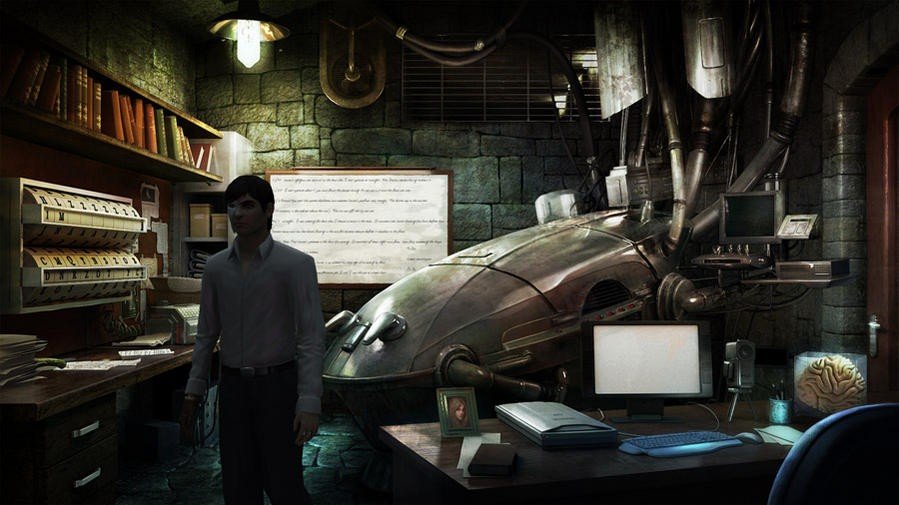
JJ: Oh, yeah. This game has a lot of real life research in it. Mainly in the areas of stage magic and neurobiology. Very fun stuff. Really! The mind is a fascinating thing.
AG: I’ve purposely avoided asking many questions about the contents of Gray Matter, as we’ll no doubt be hearing lots more about the game in the coming months. But is there anything you want to tease us with? What is it about Gray Matter that really inspires you and will undoubtedly excite players when the game is released?
JJ: That’s such a big subject. I guess if I were to give a minimal answer it would be that Gray Matter has a sense of things not being what they seem, of reality being a little bent. There are several twists and turns that I think people will enjoy. I hope the game gets out there soon so that I can see what people think of the story.
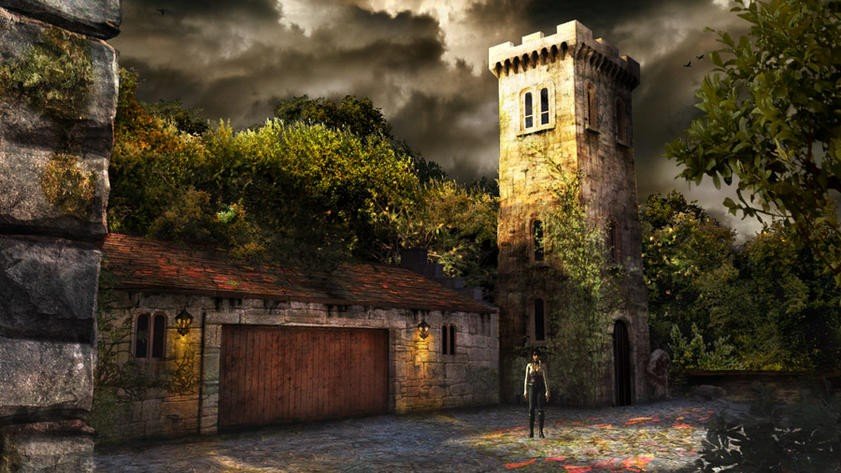
AG: Well, the sooner we stop pestering you with questions, the sooner that will be! We can’t wait to see it next year. Thank you again for taking the time to share your thoughts with us.
Latest Gaming Articles
All Articles