



Alice’s Lullaby: Episode 1

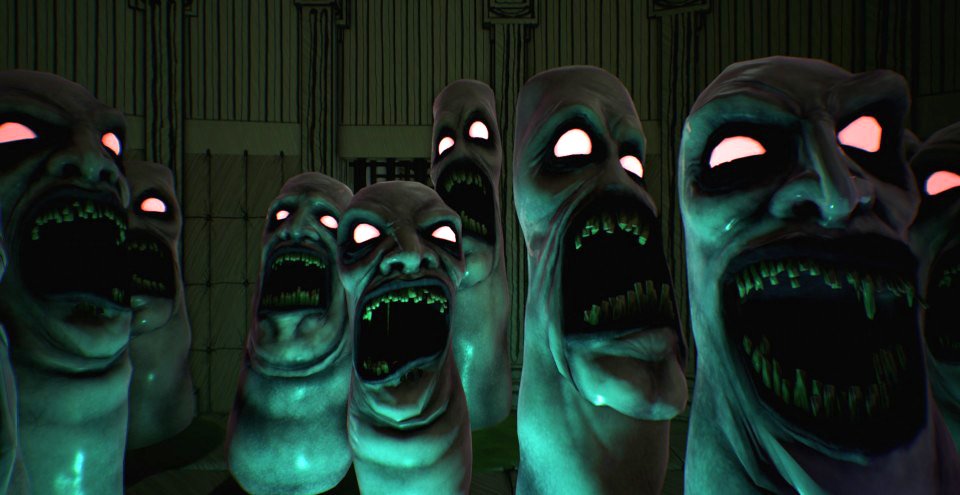
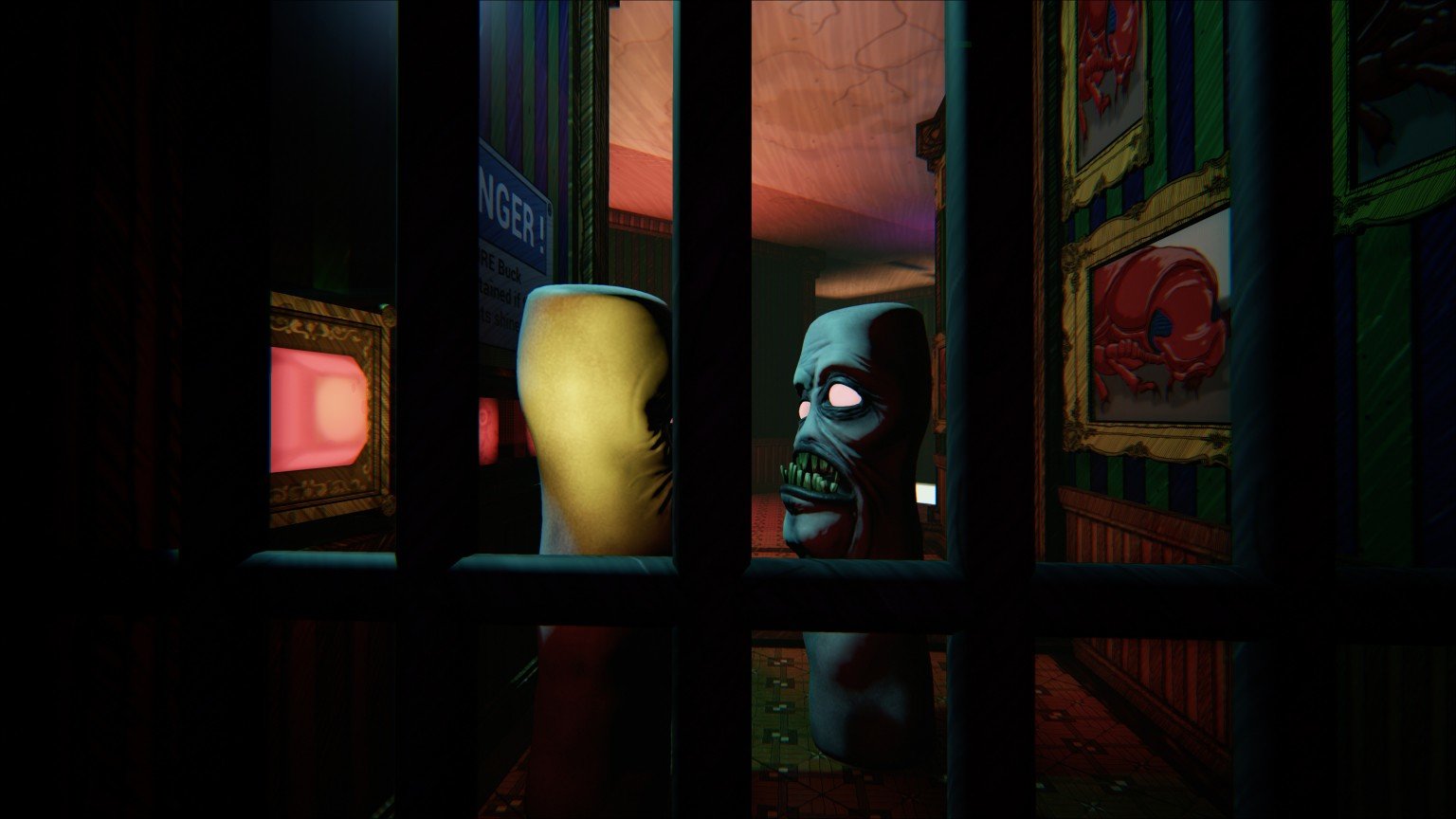
The grandchildren don’t attack you when caught, exactly, but as soon as you come within close proximity of one, the screen will start to go staticky as your lifeforce slips away. Escape in time and clarity will return, which is easy to do with just one or two grandchildren nearby. But find yourself cornered or swarmed, which becomes increasingly likely the further you progress, and it’s game over. You’ll then be sent back to the nearest checkpoint to try again, with the entirely unhelpful instruction to “try harder next time.” Yeah, thanks. Expect to see that message far more often than you’d like for reasons that don’t always feel fully deserved.
There are sporadic blue lamps that are supposed to protect you from the grandchildren, but these prove to be fairly useless. For starters, you can’t even light them until you’ve acquired the matches a fair way into the game, but even when you have, the lamps stay lit only temporarily. They don’t drive the monsters away, merely hold them at bay, theoretically giving you a chance to escape. But if you have room to flee, there’s really no need to stop and fumble with the lamps unless you need some light in the darkness. And I do mean fumble – there are no hotspot indicators in this game, so you can easily get yourself into position to light a lamp, only to click… and have absolutely nothing happen. Shuffle around a bit and click, click, and click again, and maybe the lamp will eventually light up. THIS is your great salvation with slimy homicidal monsters on your tail? Albino Lullaby has been designed from the ground up to be compatible with VR devices, so perhaps these issues don’t apply to the virtual reality experience, but I played it on a standard PC and found them a constant, if ultimately minor, nuisance.
In the final third of the game, you’ll get your one and only weapon. It’s not a gun, but for reasons unexplained, a remote control clicker emits a giant bubble that is deadly to the grandchildren. With only one charge per click you can’t use it indiscriminately, and you’ll need to continually power it up at scattered recharge stations. This sounds like a big help, and it is, but of course the game ramps up in difficulty to accommodate your newfound ability. Rather than sneaking around, you’ll throw caution to the wind as the grandchildren come out in greater numbers while deathtraps appear all around you. To avoid getting trapped, you’ll find yourself zipping past collapsing floors, bubble-killing a horde of blob creatures, and frantically searching for the next recharge station before needing your weapon again. What makes the “clicker” more frustrating than it should be is that the bubble largely obscures your view (imagine blowing a big bubble of green chewing gum in front of your eyes, and you’ll know what I mean) precisely when the screen is already starting to distort from the presence of the grandchildren. You’re literally running blind just when you need your vision the most.
The action builds to a crescendo in the endgame, a final confrontation that’s less a “boss fight” and more a high-octane culmination of everything you’ve faced so far crammed into much tinier spaces. At least, that should have been the endgame, as it’s a suitably tense and exciting way to finish. Unfortunately, there’s an entirely anti-climactic segment before the credits roll that includes some light platforming of the sort you’ve never been required to do all along. This probably wouldn’t have been particularly difficult if not for the near-unplayable stuttering that plagued my game during this section. Even without the massive drop in frame rate, however, the whole scenario still would have felt like a letdown after the pulse-pounding action that preceded it.
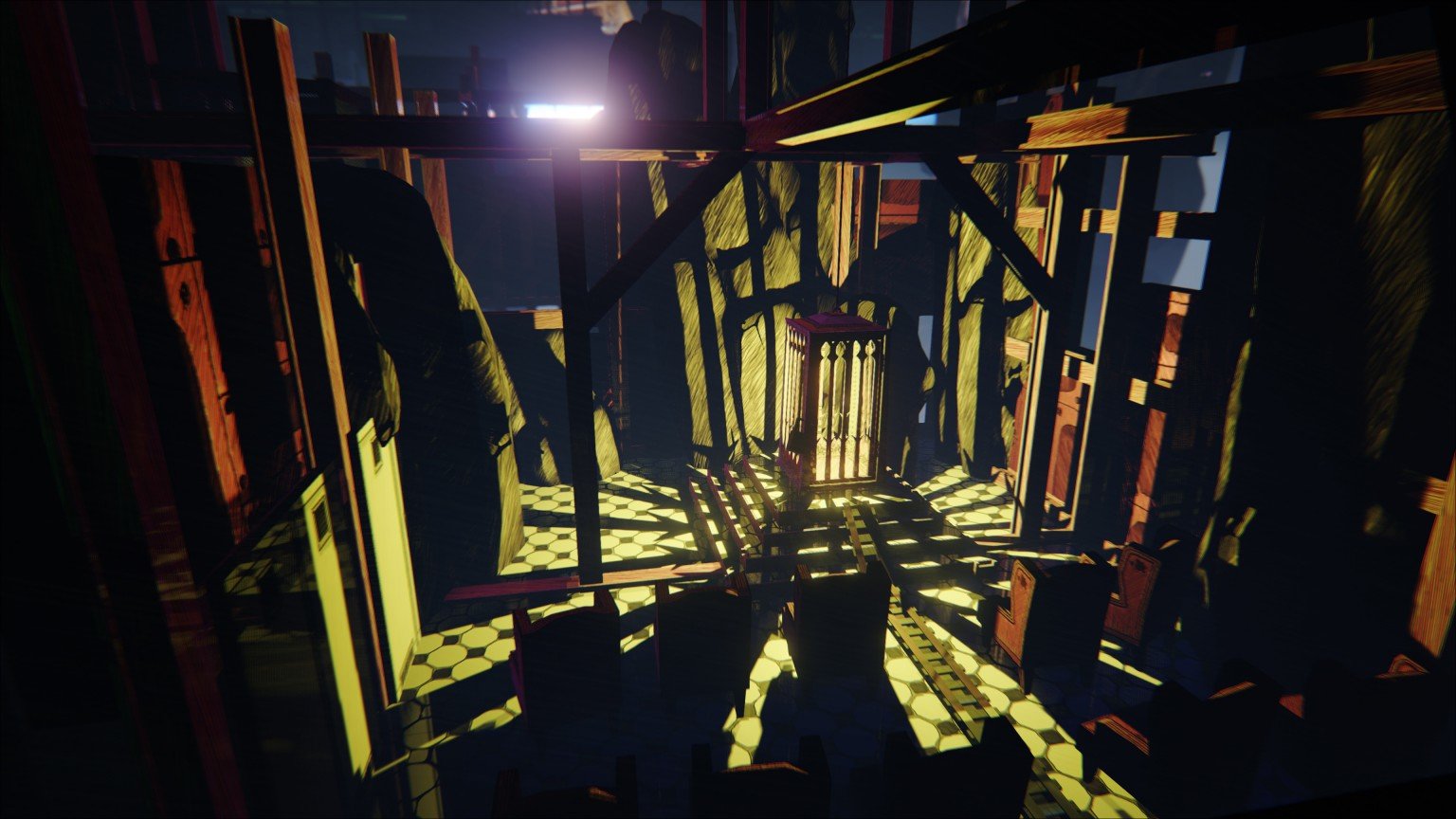
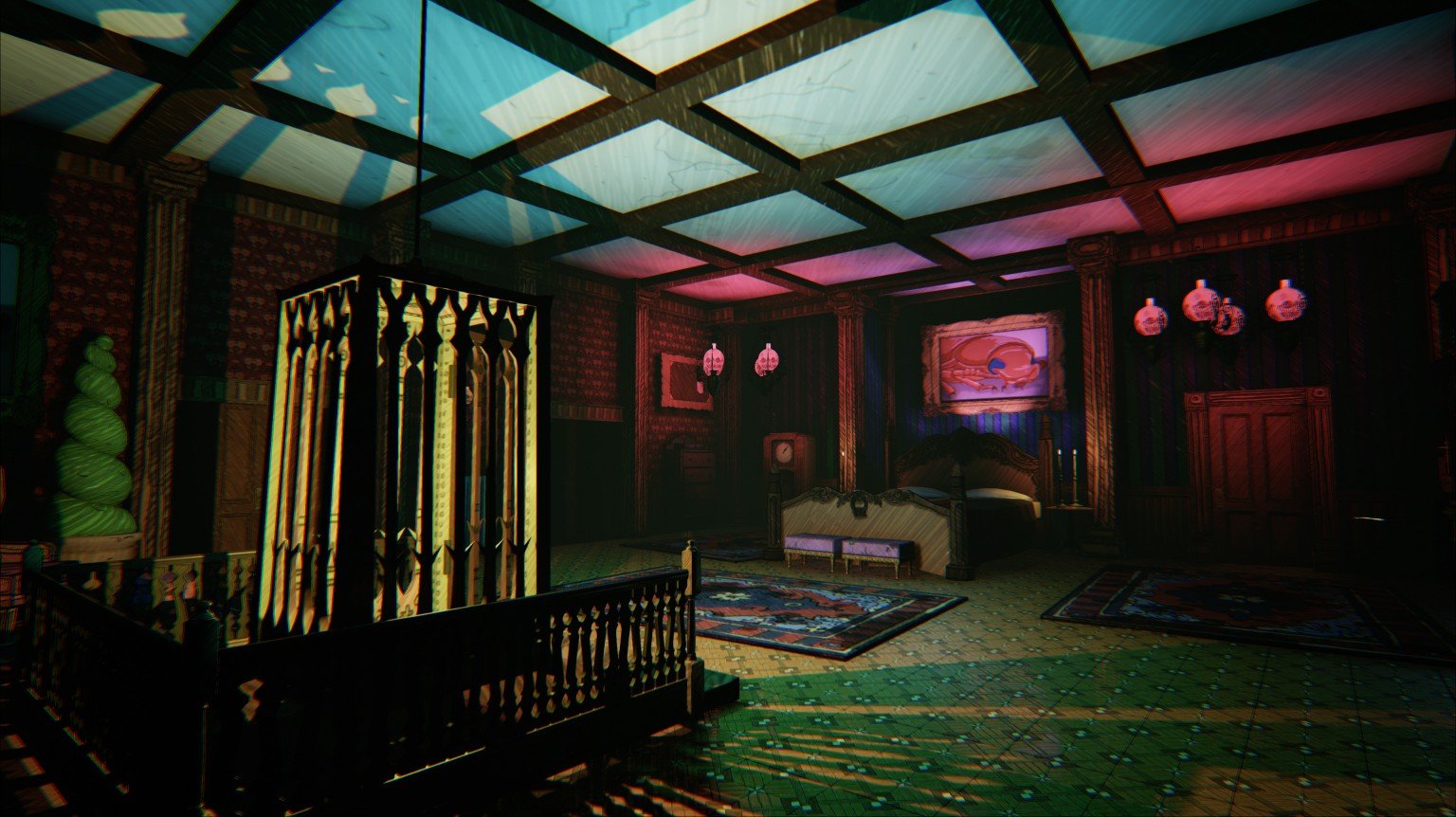
This wasn’t the only performance issue I encountered in Albino Lullaby, which is surprising in a game that isn’t very technically demanding. Other than the occasional psychedelic light show cinematic and the shambling grandchildren in-game, there doesn’t tend to be a lot of life to the environments. The graphics themselves are competently designed but usually swathed in darkness, sometimes with shades of red- or green-tinted accent lighting. The most distinctive visual element is the hand-drawn look to many of the textures, which is rare in an industry where 3D games usually eschew artistry for realism. But this game is after surrealism, not realism, and the slightly sketchy aesthetic provides an appropriately off-kilter atmosphere. I could charitably say the same about all the identical paintings, books, and chairs – as if all this were an elaborate stage set by someone (or something) that knew the basics of human construction but not the subtleties of individual taste. In truth, however, I found the repetition off-putting. It matters, too, because progress involves a great deal of backtracking and a fair bit of aimless wandering, so you’ll not only be seeing the same details everywhere, but seeing them in exactly the same places as you travel to and fro.
Although billed as “Episode 1”, this debut installment actually works very well as a standalone experience. There’s a proper ending to enjoy here, so you won’t feel strung along by a cliffhanger or unanswered questions… Okay, that last part was a lie. There are many questions left unanswered, the most obvious being “WTF?!” It’s not just me, either. That very question is baked into one of the game’s final stated objectives. You’ll get no concrete details about your own identity or where all this takes place, leaving you wondering if it’s really all just in your mind. Yet if you embrace the story on its own terms, accepting the fact that none of it is remotely believable at face value, there’s a certain satisfaction to be found in piecing together the tragic tale of this disturbing tribe of mutated horrors. You can re-read their many fragmented notes from the main menu, but not after you’ve finished – a most unfortunate omission since you won’t have time to pore over the ones you snatch with crowds of grandchildren hard on your heels in the later stages of the game.
If you’re looking for puzzles and relaxed gameplay, you won’t find any of that in Albino Lullaby. What you will find is a four or five-hour survival horror experience with plenty of ups and downs – both literally and figuratively. More eerie and tense than outright scary, this debut shows a great deal of promise even as it falls short of fulfilling it. Its surreal setting and unique monsters make for an impressively creepy atmosphere, though it’s partly undermined by design repetition and some simplistic but unfair gameplay elements. Surprisingly for a crowdfunded game, this episode strikes me as one that would have benefited from more playtesting to iron out these imbalances and add polish. I have no idea where the series is going to go from here, but hopefully it’s onwards and upwards, in more ways than one. Albino Lullaby may pale in comparison to the best horror games out there, but don’t sleep on a series with this much potential.
Latest Gaming Articles
All Articles