



Adventures in Storytelling: Fragments of Him, Virginia

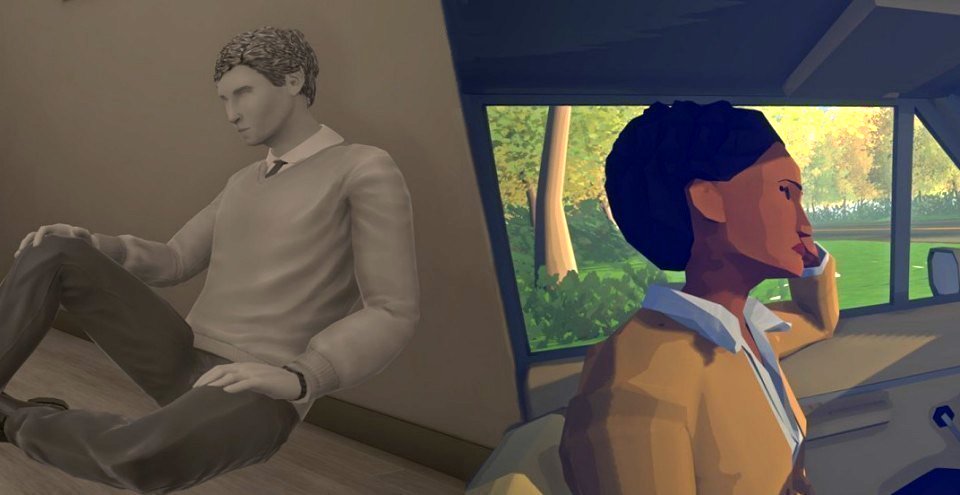
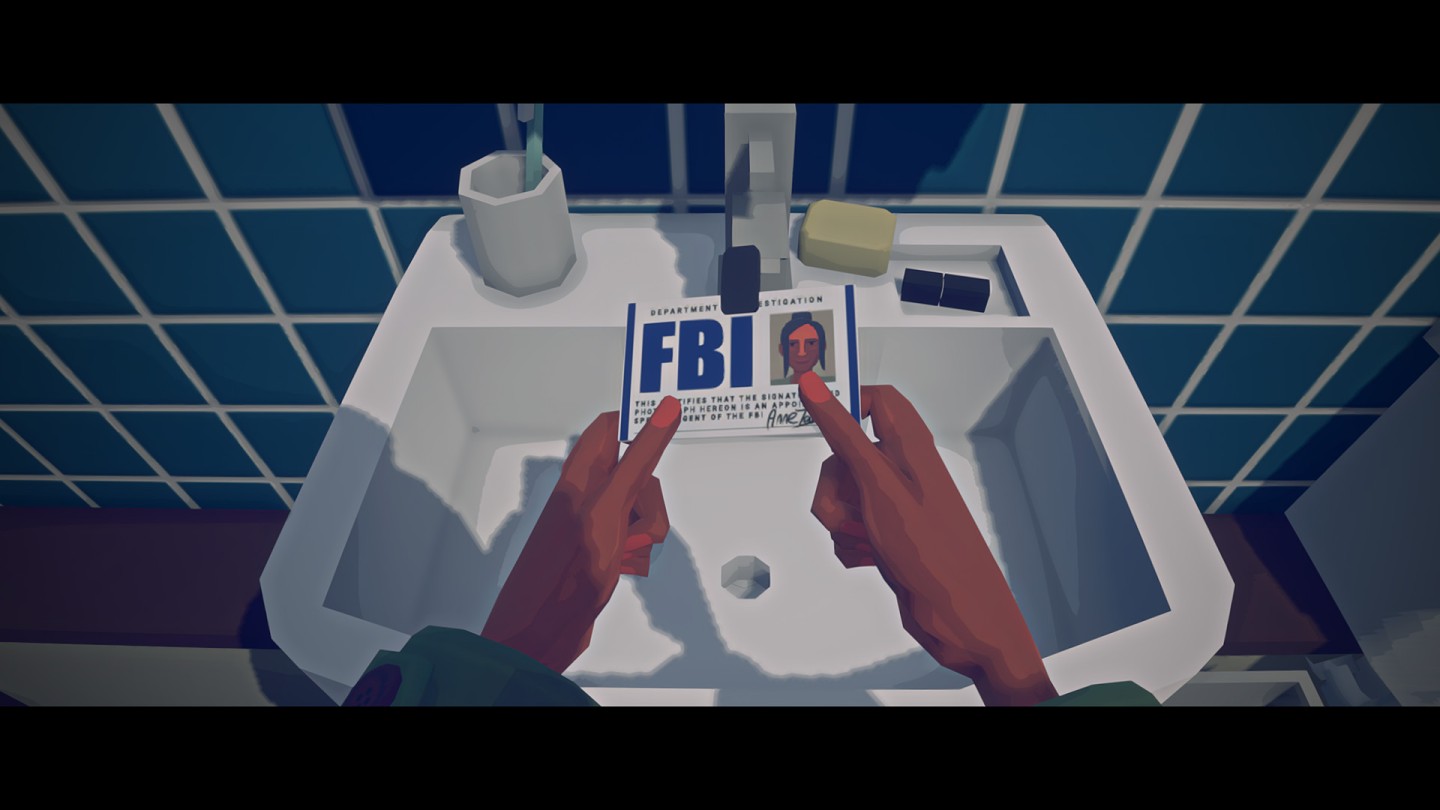
The interfaces will feel familiar if you’ve ever played a first-person 3D game. Both games can be controlled either with a gamepad or the keyboard and mouse. In Fragments of Him, a blue or red outline around a clickable object changes to yellow when you’re close enough to interact; in Virginia, a circular cursor becomes a diamond. Where they differ sharply is in the character you embody (or not). In Virginia, you directly control Anne: look down and you’ll see her body; look in a mirror and you’ll see her face. In Fragments of Him, character control is more amorphous. The game is divided up between four protagonists, but you never truly become any of them. Sometimes you seem to be seeing through the point-of-view character’s eyes, but if you pan the camera you’ll see that person frozen behind you. Click and the figure will dissolve and reappear a few steps away, as opposed to fluidly walking. This pantomime effect makes it feel like you’re not playing as these characters, but spying on them.
As much as I wanted to like both of these games, they left me unsatisfied, and I’m struggling to understand why. Usually I like emotional stories, I don’t care too much about puzzles, and I’m not a stickler that adventure games need to follow the rules laid out by Sierra and LucasArts to be true to the genre. I loved Gone Home, Firewatch, and Oxenfree, all games Steam lumps together with Fragments of Him and Virginia in my library. So why didn’t these two work for me? What’s not to like?
One big issue is that both are seriously lacking in the interactivity department. First-person 3D games have long held the promise of free-roaming exploration, but that’s not the case here. Fragments of Him and Virginia involve very little walking around (which only reinforces the pointlessness of the term “walking simulator”). The progression of events is linear and beyond your control. When you do get to explore, it’s generally indoors within a small set of rooms with few interactive hotspots. What can be clicked on usually must be in order to advance the story, sentence by sentence in Fragments of Him or camera cut by camera cut in Virginia.
It’s a real shame that interactivity is so sparse, because both of these worlds are begging to be explored. Every environment has silent clues about the people who live there. In Fragments of Him, there’s a whiteboard in the kitchen where Will and Harry have left each other silly notes, art on the walls, shelves full of books. The furniture and décor of Will and Harry’s apartment differs from Sarah’s dorm room and from grandmother Mary’s house and garden. These characters are fully sketched thanks to the places they inhabit. In Virginia the rooms are less cluttered, but telling details have been carefully placed. Open boxes strewn around Anne’s apartment suggest she’s recently moved in and hasn’t had time to unpack. A pair of shoes kicked off under Maria’s kitchen table hint at a late night the day before. An empty bedroom, barren except for a hospital bed, makes a stark statement about the person who’s no longer there. But the vast majority of these details are seen with your eyes, not with your (virtual) hands.
Because interactivity is so limited and the stories so linear, neither game offers much by way of player choice or replay value. Now, I’m not someone who thinks every narrative game needs to be choice-driven. As far back as Fahrenheit, I realized that the promise of a story players get to sculpt and reconstruct is largely smoke and mirrors. Choice worked well in The Walking Dead, which happened to be set in a post-apocalyptic world requiring a steady stream of high-stakes moral choices, but this format hasn’t translated well to all of Telltale’s other licenses. I thought Dreamfall Chapters’ attempt to incorporate player choice was a hot mess. So why complain now that these two games aren’t choice-driven?
It’s because choices draw me in. Particularly in a game with no puzzles and little to poke at in the environment, at least deciding how the character will respond to their situation gives the player some agency. One game that handles choice well, Life Is Strange, worked for me because every decision added up to flesh out a character I grew to know personally and intimately, whose struggles were my struggles. With their everyday protagonists—not superheroes, remember, but ordinary people—Fragments of Him and Virginia are already poised for this type of intimacy. But with virtually no choices to make on their behalf, I never crossed over from spectator to actor.
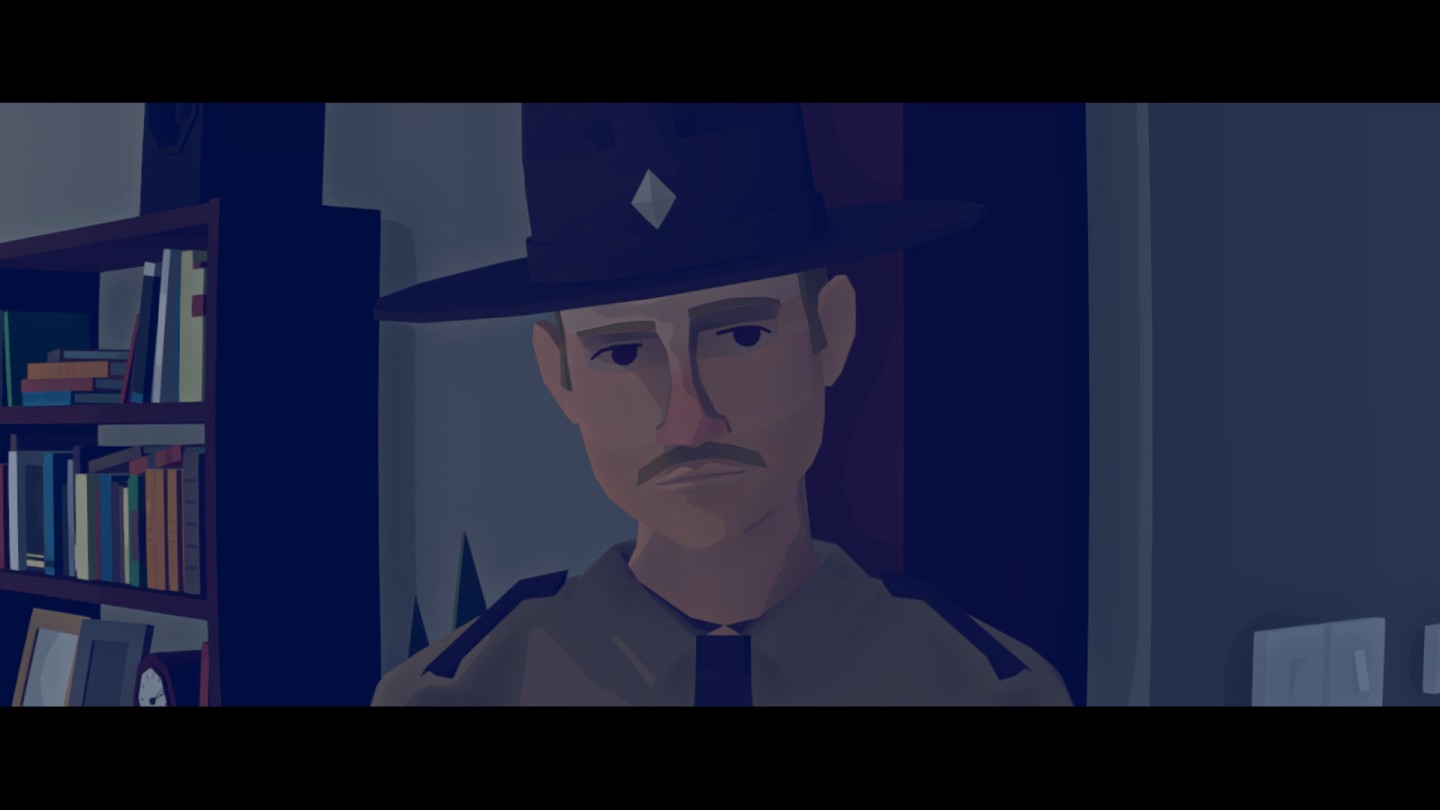
Maybe that’s intentional. When I spoke to him at GDC, Fragments of Him’s creator directly compared the game to a night at the theater. Between its jump cuts and David Lynch homage, Virginia is clearly influenced by film. But that brings me back to the original question: Why are these games at all? With its dramatic monologues and meticulously dressed sets, why isn’t Fragments of Him a stage play? With its lengthy cutscenes, vibrant colors, and dynamic soundtrack, why isn’t Virginia an animated cartoon? What makes these stories worth playing? The answer should be interactivity, but the interactivity’s just not there.
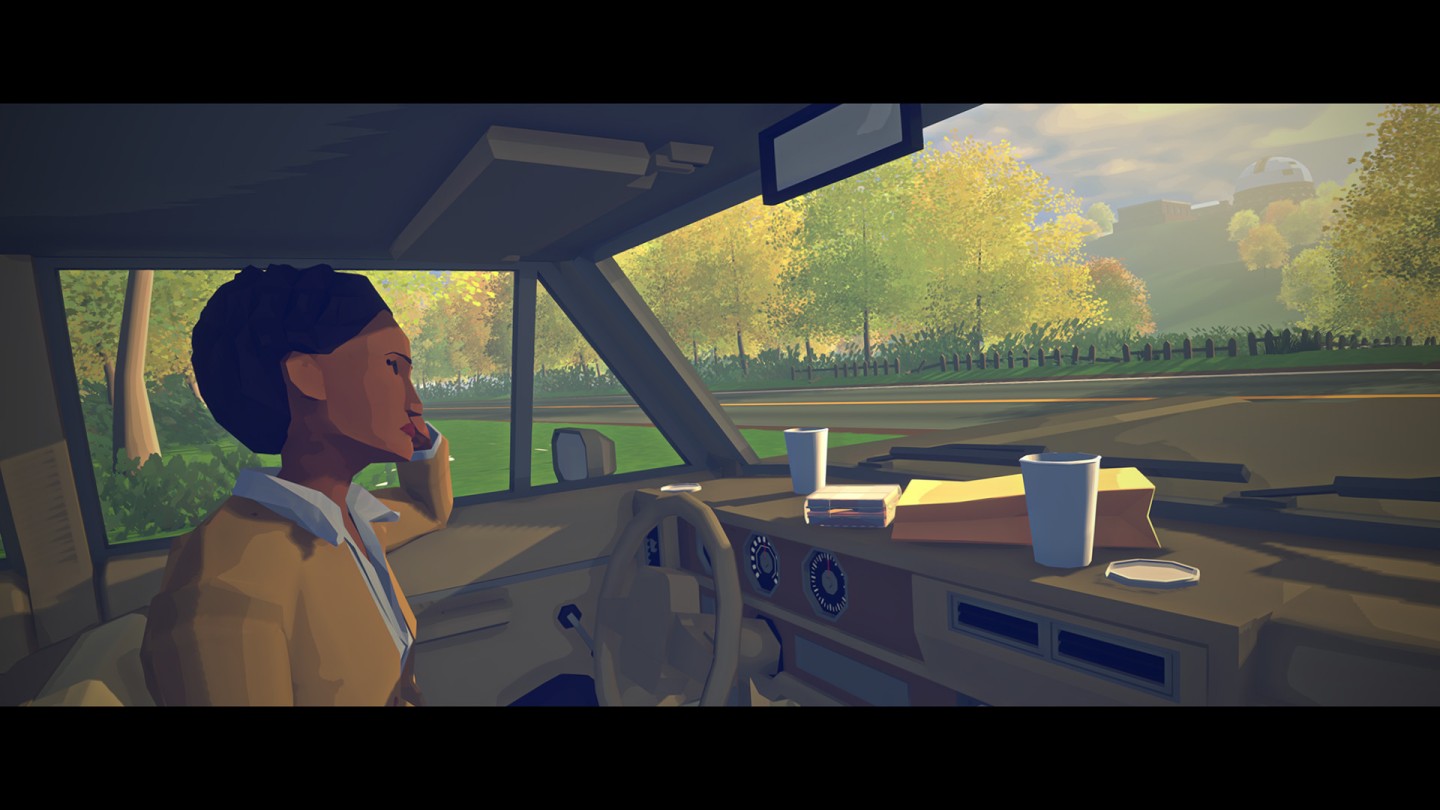
Best intentions aside, neither of these games truly succeed in what they set out to do. Fragments of Him, meant to be a powerful exploration of love and grief, turns out to be too straightforward, mostly telling instead of showing, and lacking any compelling climax or epiphany. Virginia tries too hard to confound with its artsy presentation and a befuddling, open-ended conclusion that trampled everything I’d worked so hard throughout to understand. (Looking for insight about what was supposed to have happened, I came across an interview where one of the writers suggested Virginia’s ending can mean whatever you want it to. No, that’s a cop-out! I want answers!)
Even so, the storytelling isn’t what drags these games down. In spite of my gripes, both did move me to tears. Both made me feel. I think Fragments of Him’s script is beautifully written and voice acted, and I’ve been listening to Virginia’s soundtrack and reliving certain scenes for weeks now. But with interactive storytelling, a good story just isn’t enough. As developers continue to push the boundaries of this emerging genre, they need to remember we’ve chosen to play their story, when we instead could be reading a novel or watching a movie or indulging in a night at the theater. The story should be good, of course, but the interactivity needs to be worthwhile, too. The title “interactive story” needs to be earned.
Latest Gaming Articles
All Articles