




Why ‘Gone Home’ Is a Game

Introducing Player 2
“You can be playful within a set of rules, but I [also] think that it is important for a game to have two players,” Gaynor went on. Traditionally games have two players, whether it’s two humans competing in chess or, in the case of a single-player video game, an automated system of rules that a human built at some point. The Fullbright Company didn’t try to read what the player was doing at runtime and react to the player’s input, but they wanted that feeling of a presence that’s acknowledging you and knows you’re present in the game. They achieved this by thinking about what the player might do and putting in moments that remind the player they’re not playing completely alone.
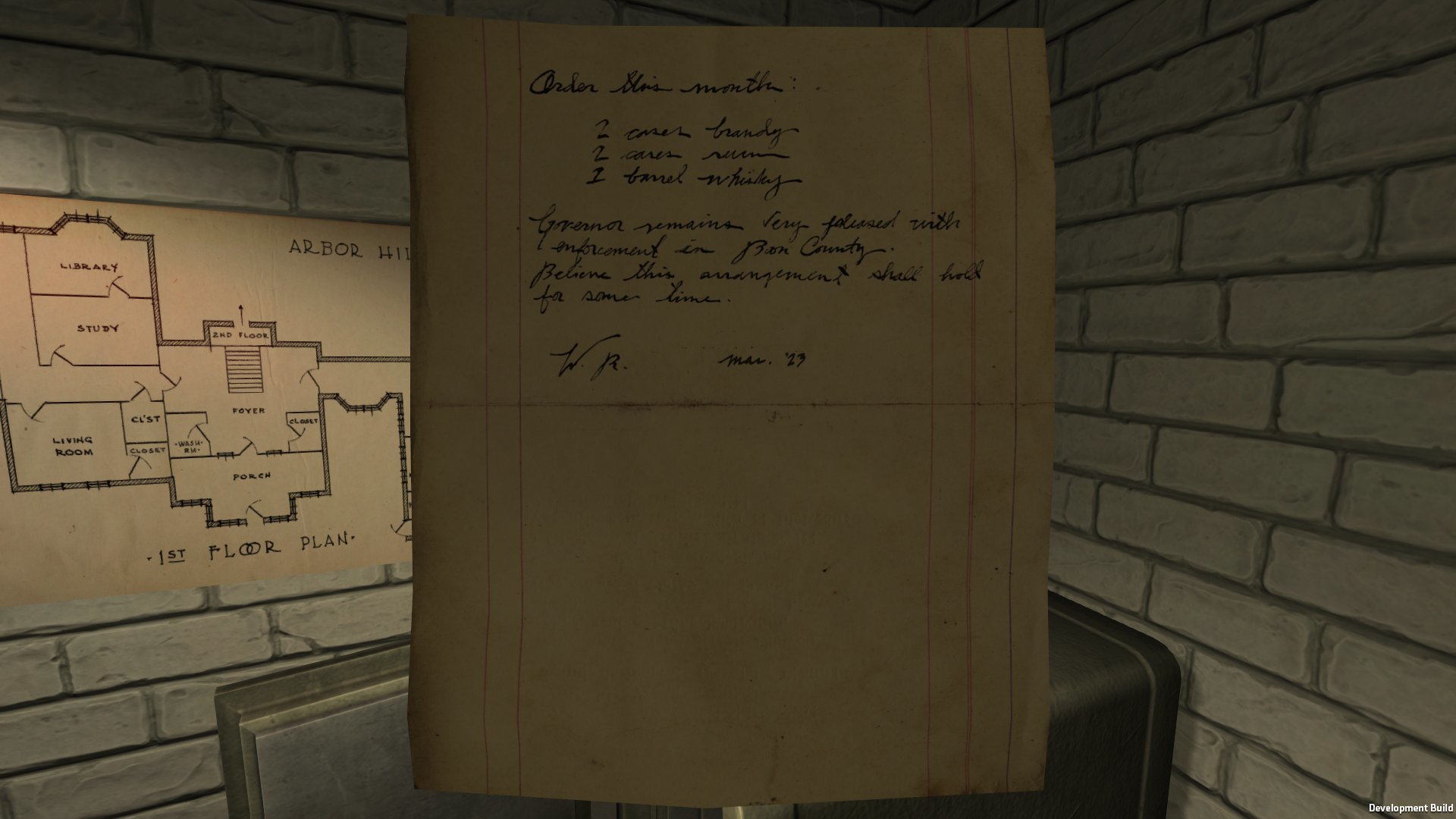
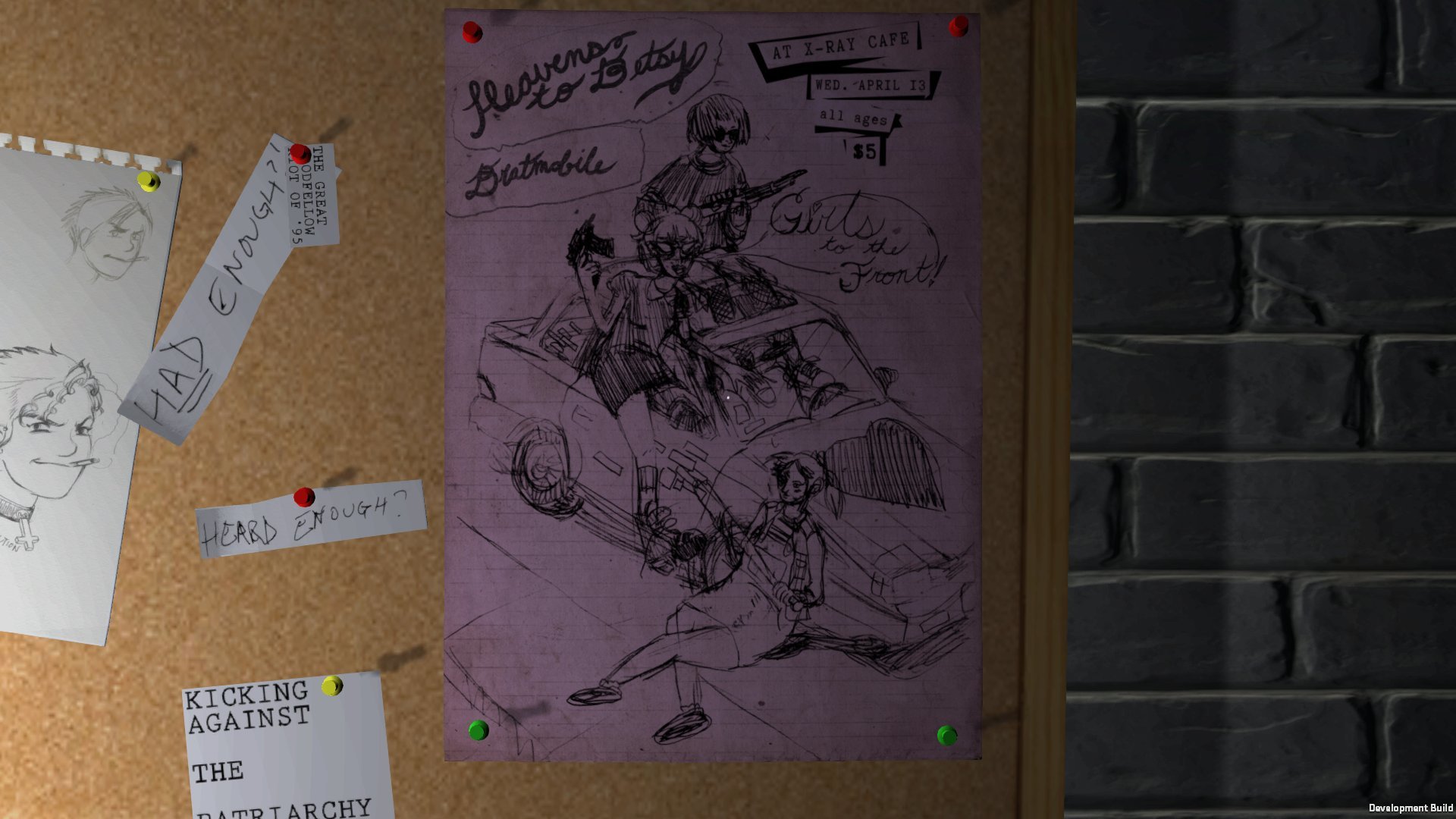
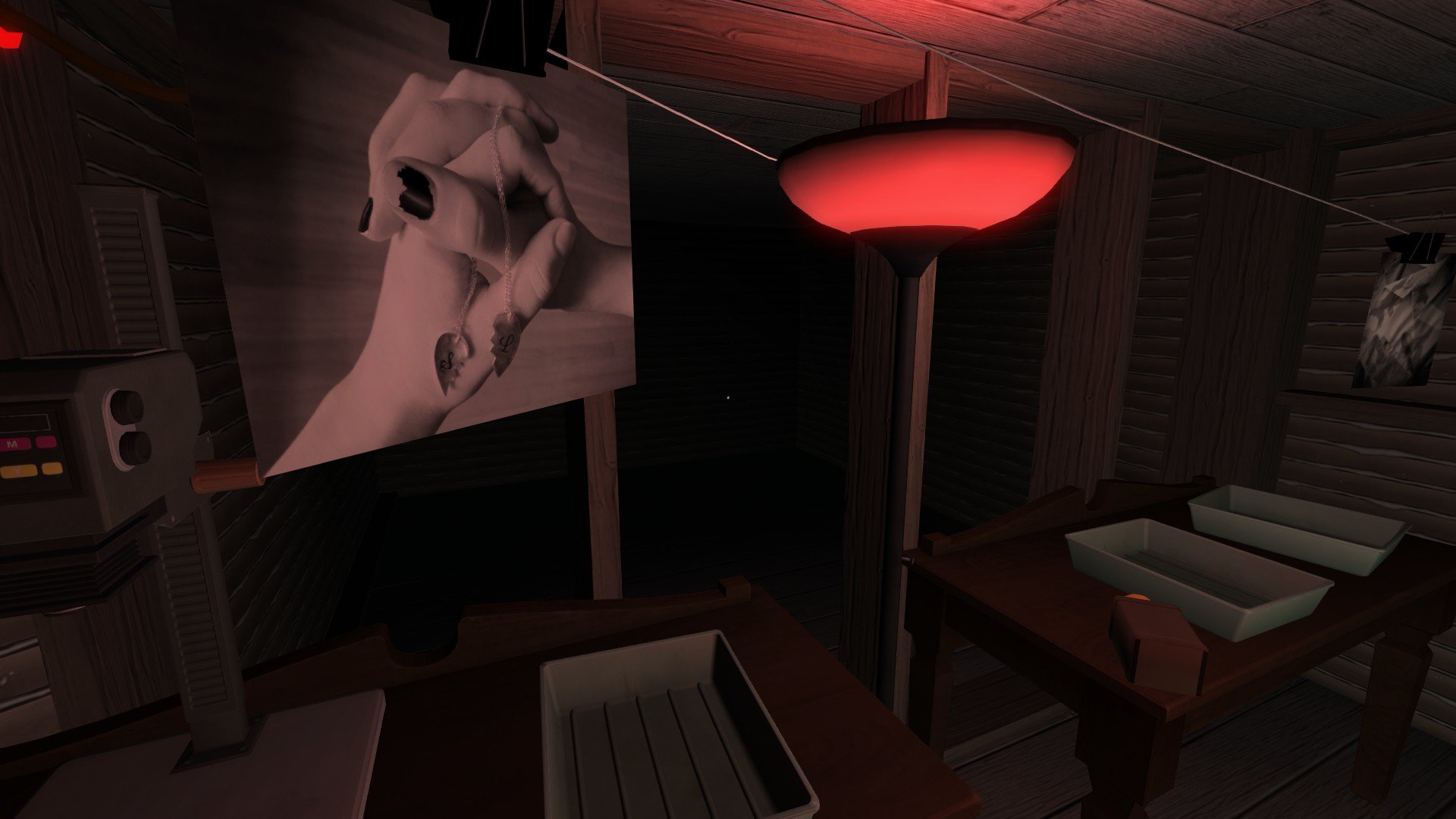
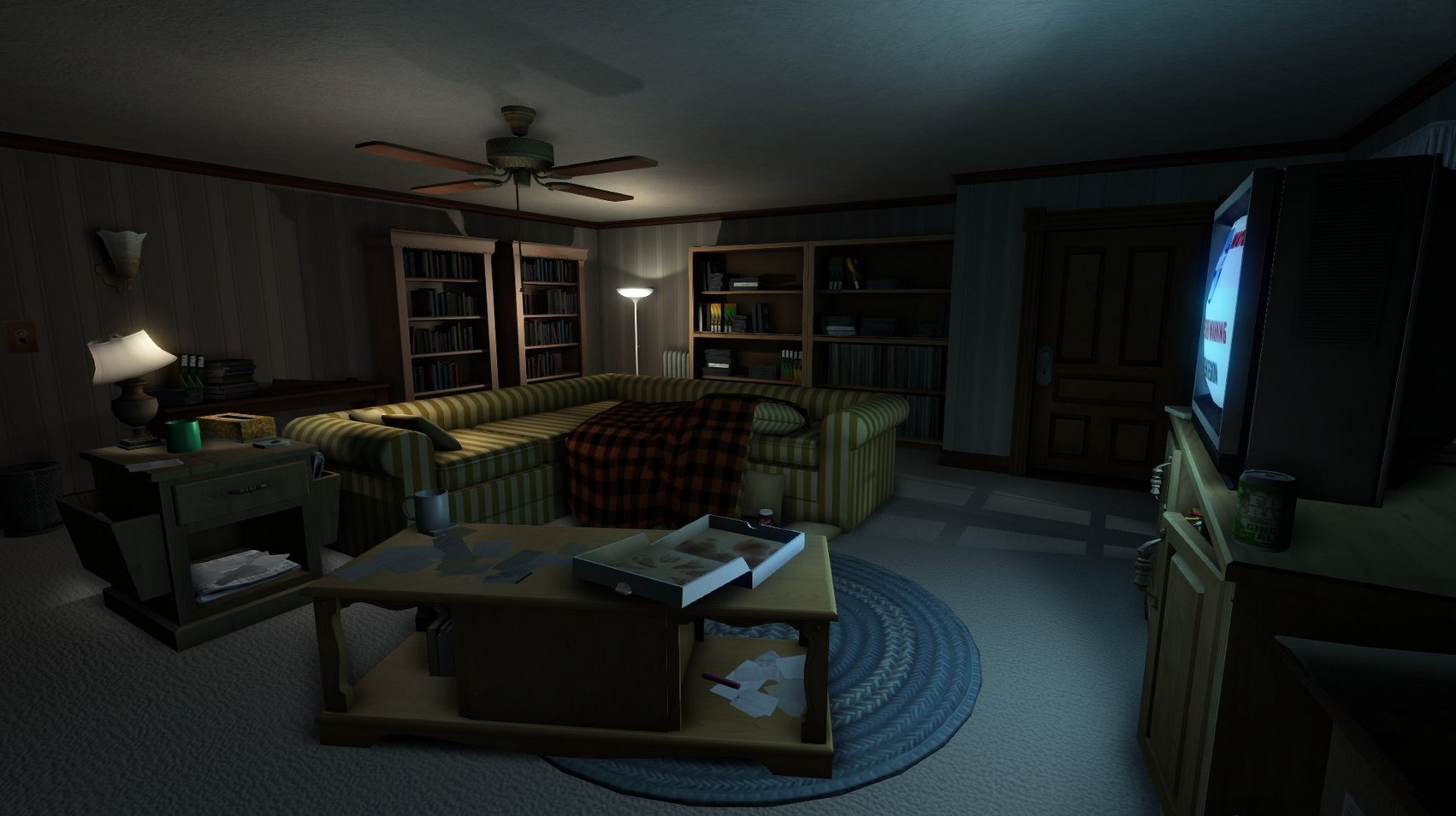
In Gone Home, one of the main things you do is turn lights on and off. The house starts out dark, so there are practical reasons to turn lights on, but the lights are also used to mark progress—turn on a light and you know you’ve been in the room, so you don’t have to go back and search it again. “But in a game that has the fiction of being in a family’s house, with a mom and dad and a couple of teenage daughters, what was happening was one of the teenage daughters was going around the house and leaving every damn light on, and do you know how much energy that’s wasting?” Gaynor joked. “We had this idea of maybe half an hour into the game, after we knew the player would have turned on all the lights downstairs, of putting this note on a bulletin board that says, ‘Sam, stop leaving every damn light on!’ We knew that 98% of players would leave the lights on, and this was a way of saying, ‘We know what you’re doing.’ You’re being acknowledged. We’re playing back with you, not by having AI dodge when you shoot a bullet, but by winking and nodding and exposing ourselves from behind the curtain.”
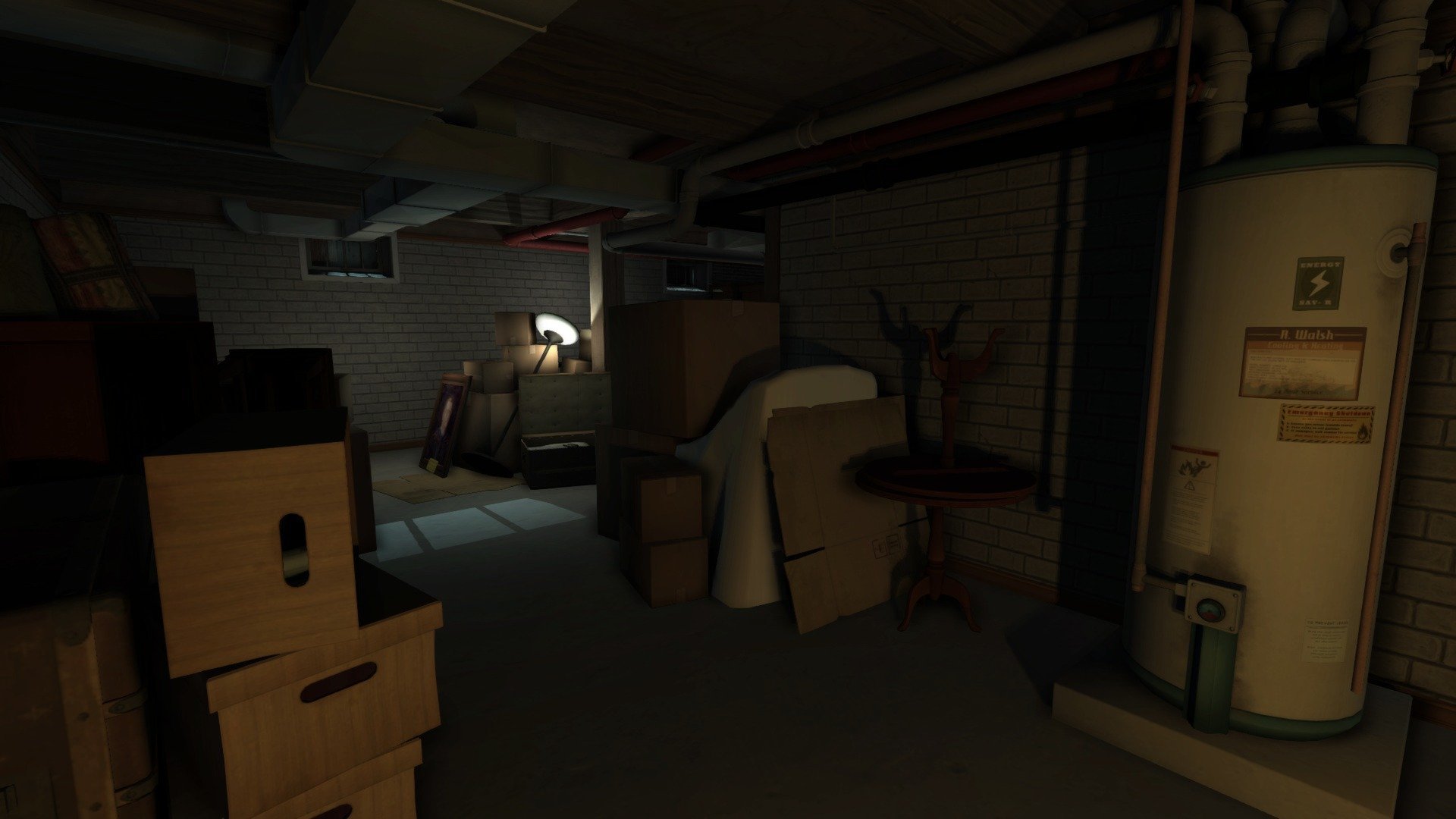
Another example of the game “playing back” occurs in the servant’s quarters in the basement, where Sam and her girlfriend would sneak away to be with each other. There’s a very personal note here, written by Sam but not voiced, that describes a sexual encounter between the two girls. It’s visible on-screen just long enough for the player to read the beginning, then closes abruptly—exactly the reaction an older sister would have upon stumbling across such an intimate account from her little sister. If you try to read it again, Katie (the character you’re playing as) won’t let you. “Up to this point you’ve been able to spend as much time with any note as you want,” Gaynor said. Closing the note automatically “breaks the rules of the game in one specific place, but for a reason: to characterize Katie systemically, and to make the player think about who they’re playing as aside from themselves, and to have that moment of, ‘What happened? Oh, I see, the game works this way now.’ A moment to break the surface and for the game and the designer to show their hand a bit, then fade back into the background. Having that second presence there, in any way you can, is important to the sense of this being a game.”
But WHY is Gone Home a game?
“Gone Home is a story exploration video game. In other words, it’s a [u]story[/u] game,” Gaynor said. “If the point of the game is to experience this story, why does it have to be a game? Why isn’t it just the text?” He pointed out that this question applies to any non-prose fiction: Why is Pulp Fiction a movie? Why is Waiting for Godot a play? Why is Jimmy Corrigan a comic? In each case, the narrative was designed for the medium in which it takes place.
With Gone Home, The Fullbright Company didn’t decide to tell a certain story and then decide to make a game out of it. What they had—resources, their own skills as developers, ideas for what they wanted to make—came first, and Gone Home’s narrative was designed within these constraints. Starting out, they were just three developers working together in a basement with the shared experience of working on BioShock games. To mitigate risk they wanted to make something they already knew how to do, but a BioShock-like game would have been too big for just the three of them. “We knew that there was something there that really inspired us. We wanted to [focus on] the exploration and the story part of those experiences,” Gaynor said. “So we could cut a lot of [BioShock features] and have only a few remaining features that we would need to be able to tell this story and make the story experience we wanted to, and add a couple of new features to expand that specific part of the game. We would be able to make a game entirely about exploration and story in a robust way. Those became our constraints.”
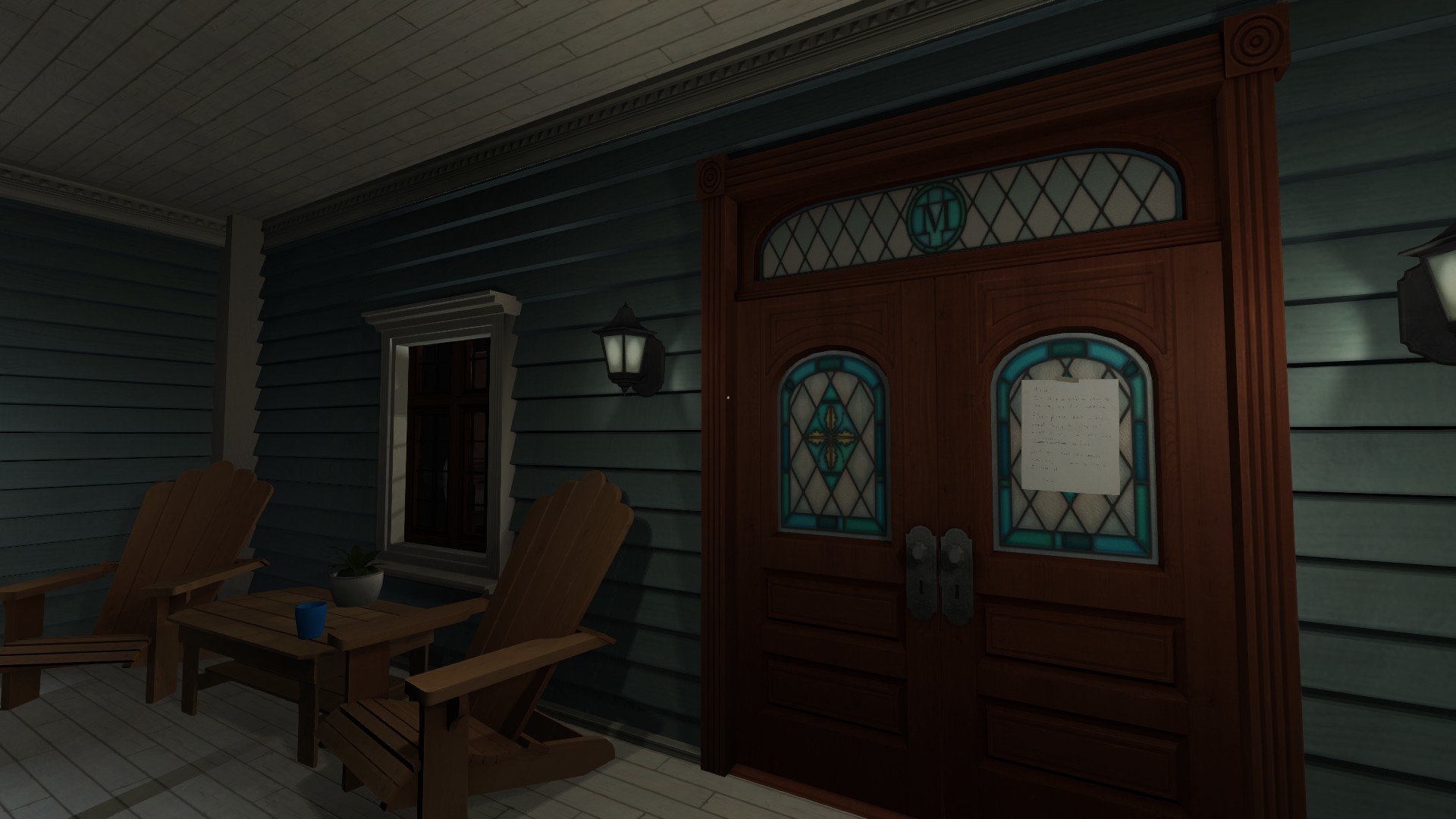
Why does Gone Home take place entirely inside a house? Because then they could build just one location, dense with information to find. Why is it set in the 1990s? They wanted a bunch of notes lying around that players would piece together, as opposed to a cell phone with a timeline of texts that told the whole story. If this story had been conceived for a medium other than a video game, the constraints would have been different and different narrative choices would have been made.
As they started to develop Gone Home and figured out who the characters were and what the story was about, it dawned on Gaynor that he was going to be writing from the perspective of a teenage lesbian: “That’s something that is not my own experience. It’s something that sounded hard and risky. We could have said, ‘We should probably figure out something else for this to be about,’ not just because it’s something I knew was going to be a high hurdle to get over, but [for] a gaming audience, it’s not [a story] that people who buy games on Steam are naturally going to gravitate to.” But Gaynor knew it was important to fight through this doubt and commit to the story, to do the research to understand the experience he wanted to depict and try to present it in an authentic way, to make it compelling enough that players would be drawn in. The Fullbright Company recognized that their audience would include many hardcore gamers actively looking for experiences to play on their computer, but others would come to Gone Home solely because of its premise.
Knowing this, they chose to make a game that isn’t about challenge and doesn’t mechanically block you from continuing, but rather a game about normal, relatable people who are not viewed through an abstract or fantastical lens. When non-gamers took that leap and said, ‘I don’t play video games, but this one sounds interesting and I’m going to try,’ requiring them to download Steam and arrive on the intimidating Steam landing page, they risked losing this new audience before the game even loaded. “Being a gamer has a stigma to it, and it’s not easy if you’ve never downloaded a game and launched it on your PC to get through all those loops. But they’re trusting us to say, ‘It’s worth figuring out to have this experience,’ and once they’ve come that far we have this opportunity to meet them halfway and welcome them in and not push them away. We’re not going to say, ‘Thank you for taking this risk and downloading our game—you died, try to be better at this thing you’ve never done before.’ We can say, ‘You are welcome into this experience, you’re invited in, and the rules that we’ve set up allow you to … have an experience that’s valuable, without being pushed away.’”
Gaynor is proud of the response Gone Home has had from people who said it’s relevant to their lives. Game developers have the potential give people the feeling of being triumphant, of getting better at something over time and mastering it, of discovering incredible worlds, of winning. “But I also think we that have this opportunity to talk about stuff that is outside of that frame and that allows you to concentrate completely on interactively getting closer to these characters, to other people, understanding them as individuals and building human empathy in a way that we as game developers have unique access to,” Gaynor said. “Any entertainment—any art worth a damn—allows you to understand other people better, and I think that the unique tools of interactivity allow [game developers] to do this in ways that no one else can.”
He closed out his talk with a quote from PC Gamer, who awarded Gone Home Best Narrative Game of the Year:
It’s been said that Gone Home
subverts our expectations of what a game experience should be in order to tell a different kind of story – but what I like most about it is that it’s not about throwing away what games are good at. Games are a form of communication that demands mutual participation. Good games expect your critical engagement, and treat you like someone capable of interpreting situations and environments intelligently without the need for hand-holding. There’s something positive and hopeful about entertainment that wants you to be active, not passive.
Gone Home is… a game about making choices. Not which soldier to turn into a robot, but where to go, what to look for, what to choose to attribute meaning to. It’s about following lines of potential through to the point where you discover what is, a drama that celebrates the things your brain is doing when you’re switched on and engaged with the world.
Of course, Gaynor concluded, not every game needs to be like Gone Home. “What’s beautiful about games is that they are all so different from one another, and they all give us amazing experiences. But I hope that Gone Home gives us one example of how … we can draw in new, different audiences and show them why [games matter] so much to us. I think that’s worth fighting for.”
Latest Gaming Articles
All Articles