


Josh Mandel

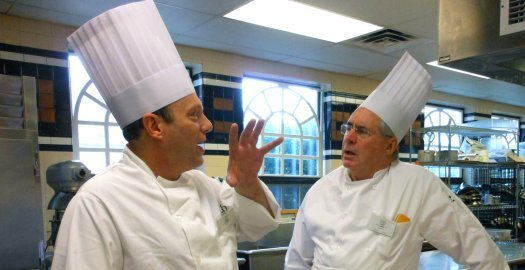
[b]Ingmar[/b]: Since you worked on so many projects for Sierra, it’s impossible to talk about all of them in detail, but I’d like to pick a few and learn about the creation of those games and your personal experiences. Let’s start with the King’s Quest series.
[b]Josh[/b]: Well, there was the KQ1 remake, my first task. My role on the title was officially Producer, but I wanted to see if I could give the game a total text facelift along with the art facelift. Since I had just played through the original, I could see so many instances where the text, which was sparse and straightforward, could illuminate what the graphics (even the newer ones) couldn’t. And I wanted to show the company that, although I was hired as a Junior Producer, I could serve a better purpose by being allowed to be creative. That’s something that Producers are often not given the opportunity to do. One of my first questions, upon meeting Roberta, was if she’d allow me to rewrite the text, and she graciously gave her absolute consent (provided, naturally, that she had total freedom to change or delete any of my text). So I rewrote most of the text and dialogue, changed a couple of puzzles to make them fairer – the Rumplestiltskin one being the most obvious. And except for one line, Roberta (Williams) kept the changes, so I was delighted. Plus we had vertical AND horizontal scrolling.
King’s Quest V was already in production when I arrived, and a large part of the company was given over to that. One of the aspects of the game that was new, and difficult, for the company was that some of the art was being done overseas…Korea, I think. People at Sierra were used to walking into each other’s workspace and collaborating in real-time, face-to-face, with their co-workers. Now people had to learn to try to collaborate via email, and that’s a somewhat different skillset. I thought Andy Hoyos did an exceptional job of pulling everything together and making the game extraordinarily visually memorable to everyone who played it.
I was uninvolved with that production until the voice casting, except for the usual stuff you hear from people who are on the team, and see as you’re passing monitors and corkboards throughout the day. I’ve already spoken a great deal about that experience in the past, but I’ll just say that while I’ve never liked my performance as Graham, that’s always been more than compensated for by the sheer selfish pleasure of being a recognizable part of what was a formative experience for so many players. Even if that’s the only taste of immortality I ever get, I’m immensely lucky. I was in the right place at the right time.
King’s Quest VI was another game in which I had only a passing role at best, reprising Graham and modelling as Shamir Shamazel. I assume Jane Jensen tapped me for that because, being perhaps the only Jew in the entire development side of the company, I was by far the most authentic schlemiel there. And I never said “no” to being involved in anything. It’s my favourite KQ, and I think what made it so strong was the collaboration between Jane and Roberta.
KQ7 was a blur for me because I was so involved with other things then. We all did some testing on it, as it was a very demanding and technologically different game.
[b]Ingmar[/b]: On Laura Bow II: Dagger of Amon Ra, you worked very closely with Lorelei Shannon, who’s stated how much fun she had working with you on this project. Please share your memories of its development.
[b]Josh[/b]: I loved working on that game, too. Bruce (Balfour) made a true mystery lover’s mystery out of a much more lightweight concept, and in that sense he pushed the boundaries of what Sierra had been known for. The plotting was so meticulous and layered that you would get out of the game exactly as much as you put into it. If you played it only as a series of puzzles, intending only to get the game to progress as fast as possible, you’d greatly miss the big picture of what was going on with the mystery. The more you savoured it, investigated and took notes, the more you’d end up with an ideal conclusion.
I loved working with Bruce and Lorelei, because they were so smart and so in-tune that if I could make them laugh just once or twice a day, I’d feel like I’d accomplished something. And what we enjoyed deeply about games seem to align very well: we all loved the same sort of frequent, illuminating, lightly cynical banter in the game messages, we all put a high value on the authenticity of what we were writing, we all wanted to put a lot of time and energy into the additional materials included in the box. For three designers to all be working on one game at the same time, and especially loving every minute of it, was a very rare circumstance, and it was an overall great experience. Probably particularly for Lorelei and I, since Bruce, as the designer and head of the project, was more in the firing line than we were when it came to pleasing Ken and Roberta and everyone else.
[b]Ingmar[/b]: In the year 1993 we saw the results of a legendary combination that would bring us a Leisure Suit Larry remake nearly 20 years later: Josh Mandel and Al Lowe. Let’s hear your memories of the creation of Freddy Pharkas: Frontier Pharmacist and what it was like to work with Al on this project.
[b]Josh[/b]: It was probably the most exciting and exhausting experience I’ve ever had on a game.
In those days, Sierra was working on a star system: you cut your teeth by working with an established designer on a game, and you’d actually assume most of the burden and responsibility. If you collaborated well, if you produced a good game, you were pretty much in line to get your own game next. That’s pretty much how Jane got Gabriel Knight after KQ6, how Bruce got Outpost after Dagger of Amon Ra, how Lorelei got Phantasmagoria 2 after KQ7, how I got SQ6 after Freddy Pharkas.
So when I was given to Al to be his apprentice on Freddy, I had a good idea of what was at stake. And although I was never a fan of Westerns (and, shamefully, had never even seen Blazing Saddles at the time), I threw myself into it just as hard as I could. Al wrote the initial pass of the design, then I was asked to assemble a team from a given group of artists and programmers who were available, or about to be available. Al and I worked together on a few elements of the design that he wasn’t necessarily happy with yet, such as adding a fourth act, having Freddy’s other ear shot off in the gunfight (even in the best-case scenario), and taking out a whole “Chinatown” region of Coarsegold that we both worried would be too politically incorrect. Al agreed to let me try to put together ballads for the opening and closing, and, under an edict from Ken that all games had to have manual-based copy protection, we decided to use the manual for the prescriptions.
It was a very intense project: the programmers and I were in one room, the artists were in the adjoining room, and so we worked for months and months. Once every few weeks, I’d go to Al’s house in Fresno, or he would come into the office, and we’d go over stuff. I was writing the manual and almost everything in the game except the “critical path” dialogues which Al had put into the design.
Bill Shockley, Cindy Brown, and Steve Conrad were the programmers, and they were incredibly successful at getting SCI to do things it was never designed to be able to handle…like the ballads and the Pharmacy workbench, which gave us memory issues right up until we shipped.
The artists were Ruben Huante, Karin Nestor, Phy Williams, and Bob Gleason. Bob was extremely fast and turned out a prodigious amount of work. Ruben was the opposite, slow and methodical, and his backgrounds and “talkers” are, I think, the graphic standouts of the game, along with Bob’s massive 6-foot-long scrolling “Main Street” painting, one of my most treasured mementos of the project.
They didn’t expect the game to ship on time. So, a couple of weeks or something after the game shipped, I bumped into the head of Sales in the hallway. “How’s Freddy coming?” he asked. I was totally taken by surprise. “Umm, it’s done, and it’s shipped,” I said. “Holy cow!” he said, “I guess I’d better start selling it, then!” So it got off to a very slow start saleswise, but was steady enough over time that Ken eventually decided to give it a CD talkie release. By then, I was working on SQ6 and wasn’t even told about it ‘til Al was in the recording studio and facing a mountain of inventory-on-inventory messages. Heehee.
Latest Gaming Articles
All Articles