



Eye on iOS: Volume 9


Cryptic series
Stephen Brown
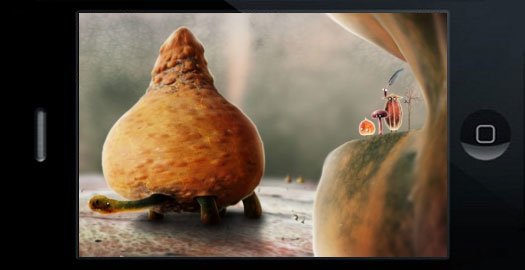
With their four-games-and-counting Cryptic series for the iPhone, 3D Methods certainly offer some variety in setting. Two of the games link together to form an overarching narrative. In Cryptic Keep you seek entrance to the magically locked keep of the ancient king Telvonus, hoping to find treasures inside. In the sequel, Cryptic Kingdoms, your discoveries in the keep have shed more light on the disappearance of Telvonus and set you on a quest to find the lost monarch. The other two games present standalone stories. In Cryptic Caverns, a shipwreck lands you on a remote island that seems to have had more than its fair share of such events. In Cryptic Cosmos, you take the role of an intergalactic bounty hunter in pursuit of a dangerous criminal.
In all four games the graphical presentation uses a slideshow format. The semi-realistic images range from the worn and irregular stones of the ancient castle to the high-tech metallic corridors of a beleaguered spaceship. The various scenes have limited animation, usually triggered by the player when they occur, such as doors opening or the operation of various puzzle-related mechanisms. The lack of any general background animations does leave the environments feeling a bit sterile at times, but this is usually in keeping with their abandoned nature. On the relatively small iPhone screen, the detail is crisp and clear, the vital mechanisms and objects easily spotted amongst the background detail.
Cryptic Kingdoms
Each game comes with some simple but effective tunes fitting the respective settings, and there are also various sound effects, mainly related to the player interacting with items, such as the ring of a blacksmith’s anvil. There is very little interaction with other characters, most areas being devoid of any other people. Even Caverns, the game with the most secondary NPCs, only has simple unvoiced dialogues without extensive dialogue trees.
Play mechanics mimic a point-and-click interface, with directed finger taps taking the place of a cursor. Navigation can prove somewhat confusing at times, as you advance by tapping on-screen exits, but often backtrack using a button that takes you to a previously visited scene. This varied approach to movement, coupled with camera angles changing from location to location, can make it easy to get lost, though the relatively small areas minimise the confusion. To assist you in this, Cosmos and Kingdoms come with reference maps, though the other games do not include this feature. Cosmos also comes with a freely accessible hint system. The only other game with this feature is Caverns, though it requires you to exit to the main menu to access hints.

Cryptic Caverns
The puzzles include a variety of styles throughout the series, including inventory, dialogue, and the operation of a wide variety of mechanisms. Their degree of integration into the story varies, though there are usually in-game clues that will help you solve most of the puzzles. The less-than-seamless integration can sometimes make it harder than necessary to work out what to do, but diligent exploration should overcome any uncertainty. The puzzles on offer should not prove too hard for experienced adventurers, though some of the mechanisms do provide more complex challenges.
In many ways, the Cryptic series gameplay feels like a sequence of escape-the-room scenes, which should appeal to those who prefer a little more linearity in their adventures. Those who enjoy more story with their gaming may find the narrative a bit on the thin side, especially when coupled with the limited integration of puzzles. They do look nice, however, and it’s possible to finish each game in under an hour, making these games reasonable options for anyone looking for an adventure fix on the go.
Cryptic Cosmos
Available as universal apps for both iPhone and iPad, there are no free trial versions for these games, but you can download Cryptic Keep, Cryptic Caverns, Cryptic Kingdoms, and CrypticCosmos from the App Store for under a dollar each.
Tiny Space Adventure
Willem Tjerkstra
An astronaut has some engine trouble and crash-lands after being trapped in the gravitational field of an unknown planet. Luckily he is not hurt, but his spaceship doesn’t look so good. Its window is broken and it’s buried deep in the soil, with thick clouds of black smoke billowing from the main engine. It’s a total write-off. Undeterred by his misfortune, the astronaut starts exploring his whereabouts. Soon he discovers a mighty rocket in the distance and its tip is pointing at the sky, ready for launch. This is his ticket off the planet! But first he’ll need to traverse the rocky terrain to reach it, which proves to be far more dangerous than he imagined. The planet inhabitants have secured the launch area with lasers, deadly robots that roam corridors, lots of doors leading to uncertain destinations, and other creative ways to impede unwanted visitors. Our hero has to hit buttons, press switches, and solve puzzles, and will probably even die sometimes before he’s able to reach his ultimate goal.
At first glance, Tiny Space Adventure by A&R Entertainment looks like a standard platform game. There are several horizontal planes visible on the screen on which the astronaut, whose helmeted head looks uncannily like a fried egg, can walk. However, the running and jumping usually necessary in platformers is not required here. It is not even possible to make the protagonist walk faster than his default leisurely pace. Actually, he hops more than he walks, conceivably because the gravity on this unknown planet is less than he is used to. Though if that is the case, he should be able to jump quite high and far, but he never jumps at all. In fact, no dexterity of any kind is needed.
That doesn’t mean you can’t die, however, as there are many deadly traps to overcome. Some of them are timed, like lasers switching on and off at a certain frequency, but all timed ‘actions’ are so generously slow that you’ll practically have to make an effort to get yourself killed. If you do die, the level is simply restored for you to try again, and you’ll learn something that you can use to succeed the next time. There are unlimited lives so you can try as often as you need to finish a level. The designers paid a great deal of attention to all the ways you can die in this game: you can be eaten, shot at with laser beams, dissolved in acid, crushed… you name it. The astronaut’s body always shows the proper cause of death, though in a somewhat funny (and certainly not gross) way.
The way to advance levels is by using your brain to solve puzzles. As a reward for each puzzle you solve, the environment is modified in some way, like a bridge extending or door opening. In one stage there is a sort of computer terminal that presents a series of standalone puzzles like a memory minigame, connecting all the same colored dots without any line crossing another one, and others. All puzzles are of moderate difficulty.
The iOS interface is very simple and neat. When the astronaut is next to an item that he can do something with, like a door or a lever, an icon appears above his head, indicating the possible action. Tapping the icon makes him perform it. You can carry one item with you, which the protagonist places on his helmeted head (the only place to store anything), and when you’re in the right place to use the item an appropriate icon appears.
The cartoony graphics of Tiny Space Adventure reflect the fact that A&R used to make games for kids. They are simple, clear, and drawn in subdued colours. Everything you need to know is made clearly visible; for instance, a pulsating ring is displayed around an object that changes when you move a handle or flip a switch. The environment is adorned with glowing crystals, and in the background you see big stars and an enormous moon. In every level there are little green aliens hiding behind rocks, and fluffy white alien bunnies hopping around. Tapping them with your finger doesn’t do anything to help you progress, but it does increase your alien or bunny score.
These platforming adventures are accompanied by a short, gloomy and very repetitive tune that can’t be switched off. You can turn the volume down on your iOS device, but doing so also impacts the sound effects. Then again, the few effects and other noises, although good, are not necessary for completing the game. You won’t be missing any voiceovers, at least, as there are no voices in the game. After every level there is a cutscene in which a new peril is discovered by the astronaut. What he says or thinks (it’s impossible to see his face through his helmet) is shown as text on the screen.
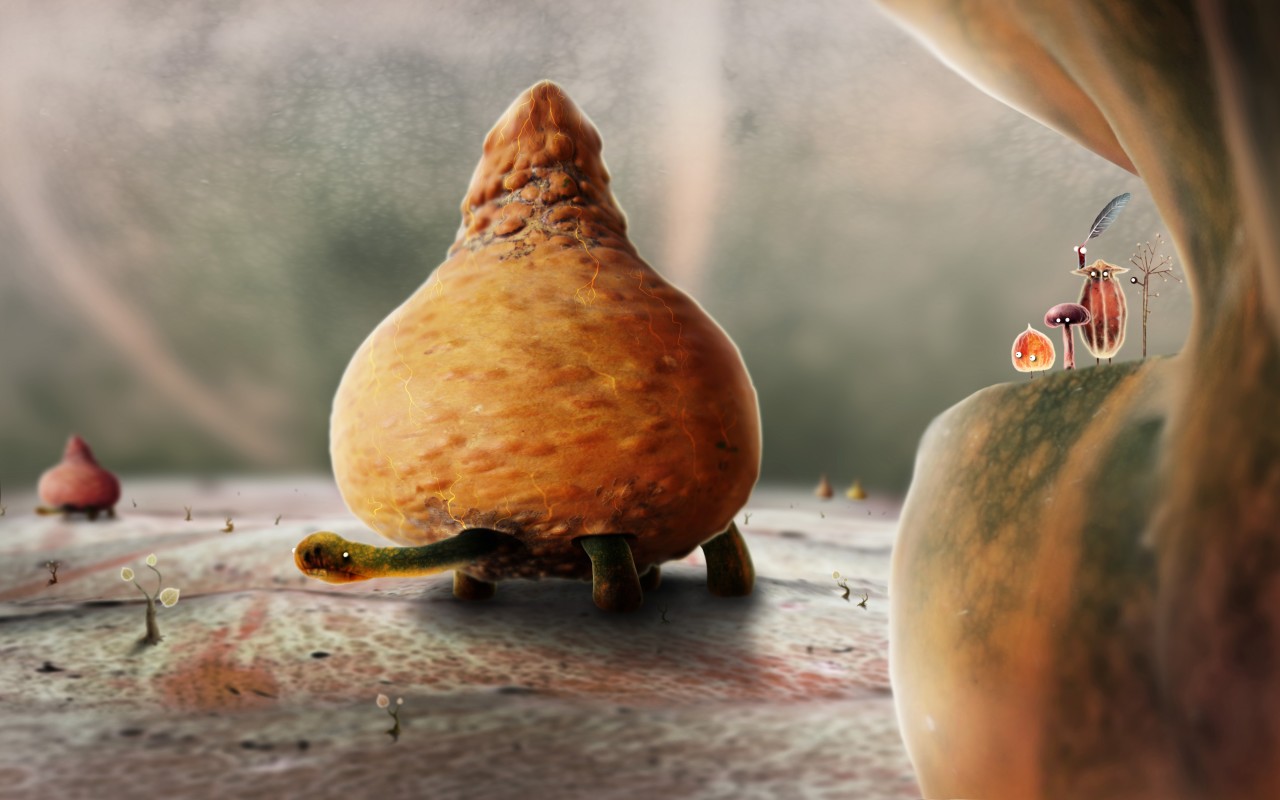
Overall, Tiny Space Adventure is a fun little game that even clever children (maybe eight years old and above) can enjoy. The 13 levels took me around two hours to finish. The game’s total lack of story prevents it from being considered a real adventure, but nor is it a real platformer either, occupying that space where puzzle, action and adventure games overlap.
Tiny Space Adventure can be purchased for just $0.99 on either iPhone or iPad at the App Store.
The Minims
Randall Rigdon
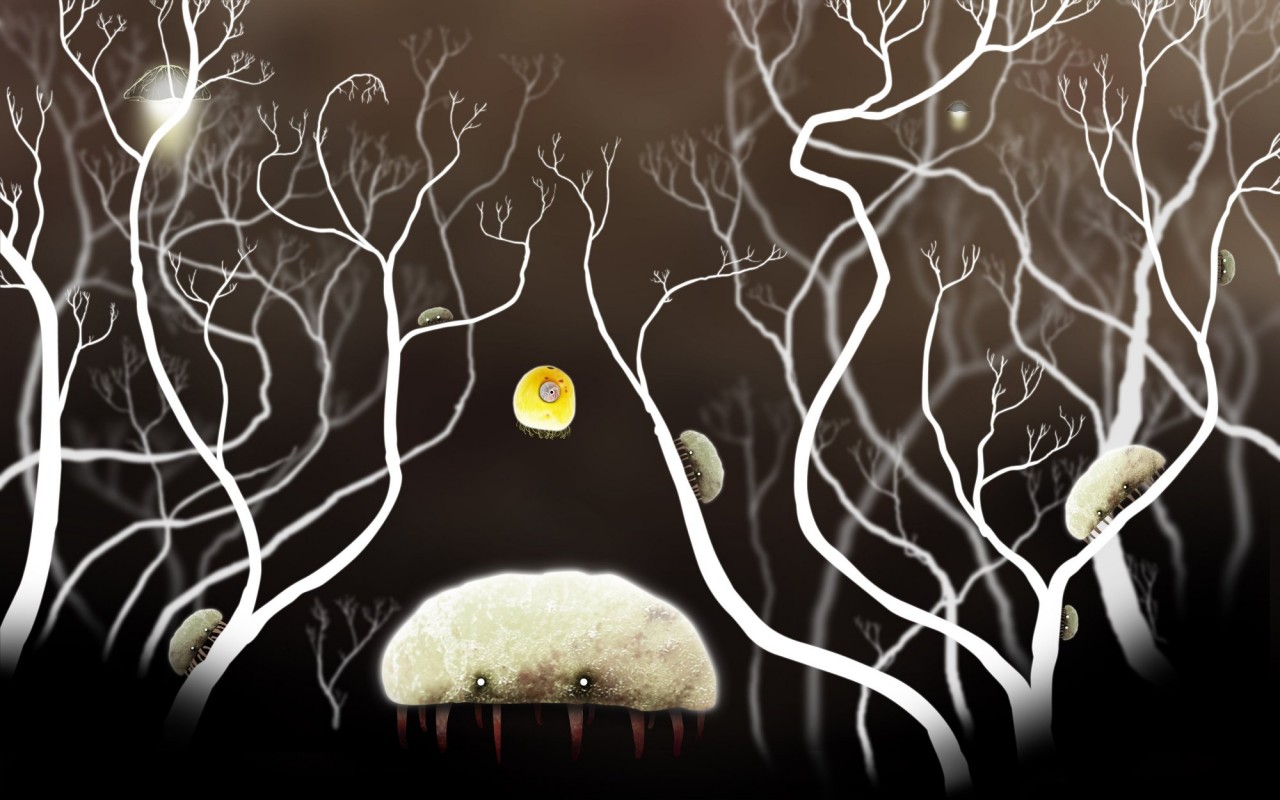
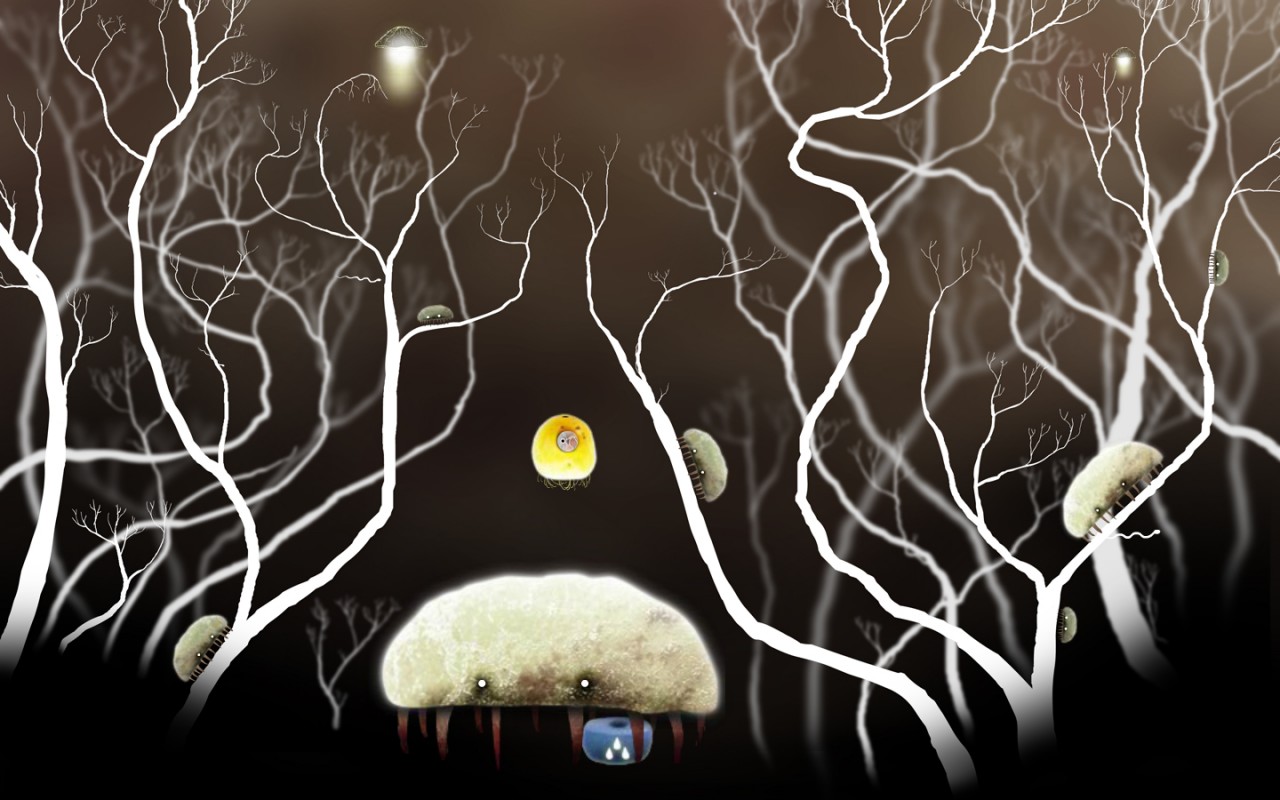
The Minims is a very strange, very surreal adventure that takes place inside a vibrant cartoon world. The journey begins with a weird, misshapen, yellow blob named Mii, who’s highly evocative of The Book of Unwritten Tales’s Critter. The game presents itself as a third-person adventure with Mii fully present in every scene, but it actually works more like a first-person adventure: you swipe to pan the camera around, tap to move from scene to scene and interact with the environment so that Mii can successfully navigate through the environment at your command once the puzzles are solved.
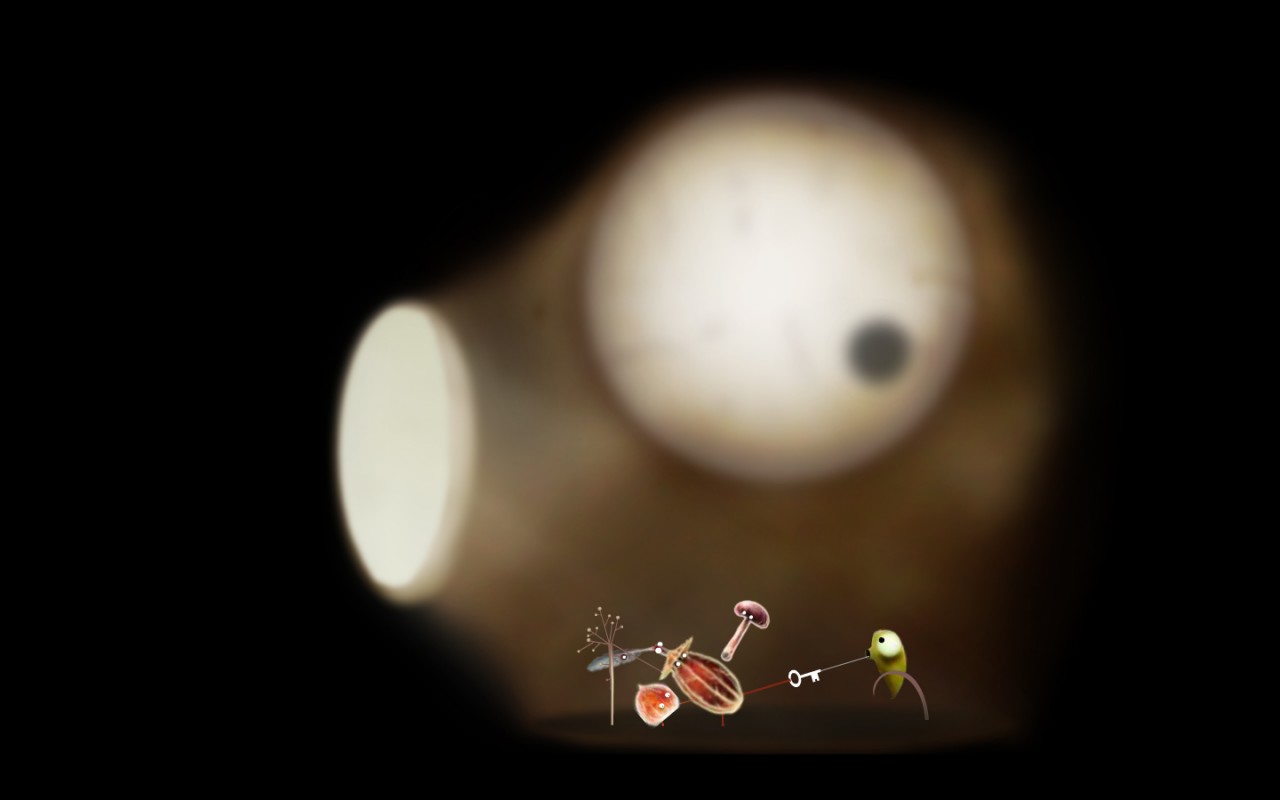
Told through very cryptic, near-gibberish (although slightly discernible) dialogue, the plot unfolds as Mii sets out to find his missing friend U. Along the way, Mii meets a variety of characters, including a talking hedge bush and a bird who chooses to travel by air balloon. Given its fantastical, abstract nature, the puzzle logic tends to be equally bizarre. Often seemingly simple or menial tasks, such as obtaining a colored ball or restoring electricity to the vicinity, are only achieved through completely illogical fetch quests. In one particular instance, I found myself looking up into the sky and dragging around what I thought was mere background detail onto a completely unrelated object on the ground to reveal one of the necessary items. I only stumbled upon this solution by complete accident and even in hindsight it still makes no sense.
If you’ve been looking for a very odd, outlandish, very European adventure for your iOS device, The Minims surely delivers in its peculiar cartoonish style, somewhat reminiscent of The Neverhood. Unfortunately, unlike the 1996 claymation classic, here the music and sound effects are hardly present at all. This is clearly meant to be just the start of an ongoing series, but the story has barely gone anywhere by the time this opening installment is finished. On the plus side, while originally released for a small cost, the game has since become entirely free for both iPad and iPhone. There are glimmers of promise in this quirky debut, but hopefully any upcoming commercial sequels will refine the gameplay and offer more story substance moving forward.
(Note: Since time of writing, The Minims has been updated and re-released as a full commercial adventure.)
Latest Gaming Articles
All Articles