



Eye on iOS: Volume 8

Sherlock Holmes: The Awakened
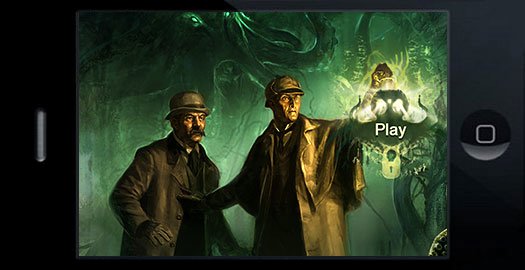
When Sir Arthur Conan Doyle created Sherlock Holmes back in 1887, he surely never could have conceived that one day we’d be controlling his great detective on portable gaming tablets. In fact, even as recently as 2007, when Frogwares first developed Sherlock Holmes: The Awakened, they likely couldn’t have predicted it would happen just six years later. Yet here we are in 2013, and Holmes and his trusty sidekick Dr. Watson have now emerged on iPad, along with a dangerous Lovecraft-inspired cult intent on raising the hibernating giant cosmic entity named Cthulhu by kidnapping people for use in dark religious rituals. It’s an odd mishmash of themes, and our review of the PC original was equally mixed, but much has changed between then and now.
Although more or less a straight port, the iOS version of The Awakened is based on the “Remastered Edition” re-release from 2008. The most prominent feature of that update was the addition of a third-person view to the default first-person perspective. It was a welcome move that balanced the more modern free-roaming controls with the classic point-and-click method, even allowing a switch between the two on the fly. This conversion offers both options as well, though neither is without its problems. Of the two, the third-person method probably works best, as you simply tap where you want Sherlock (or Watson during his playable segments) to go, double-tapping to run. But since the game wasn’t originally designed to accommodate these controls, the camera frequently switches to new angles in disorienting ways. Alternately, it will pan along with your movement in open spaces, but there’s so little room to click ahead of the protagonist in the direction he’s moving, it’s a clickfest just to get anywhere.
The first-person scheme tries to simulate the PC’s two-handed mouse-keyboard combination. On the left side of the screen, swiping and holding in the desired direction will cause your character to move that way, while doing the same thing on the right side of the screen controls the camera. This pretty much forces you to play with two hands at all times, as you’ll constantly be adjusting both as you move around. It works, but it’s not particularly intuitive, and it’s easy to get disoriented in tight spots or when attempting to maneuver around obstacles. It’s much better suited to wide open spaces, of which there are plenty throughout the game, though the interactive quick travel map eliminates the need for traversing many of them once you’ve discovered key new locations. Fortunately, you can still switch between the two methods any time, so I tended to fall into the first-person outdoor, third-person indoor routine, and choice is always a good thing.
In either view, hotspots are very few and far between. In third-person, you can slide your finger around the screen until large interactive icons pop up, while in first-person you simply need to navigate yourself close enough for the same icons to appear. There is a hotspot highlighter option for the former, but strangely it’s an all-or-nothing option. You’re either stuck seeing all hotpots glaringly identified before you even start looking, or you risk missing a single detail over a wide area that could result in frustration and plenty of backtracking. (You can switch the highlight feature on and off as well, but this is more a nuisance than ideal solution.) In the interests of time, I generally chose to keep it on, as the challenge here really isn’t (or shouldn’t be) finding items to use, but figuring out what to do once you have them.
This being a Sherlock Holmes game, there are several investigative sequences mixed in. There are close-up views that you must scour with the built-in magnifying glass or measuring tape, a lab table at 221b Baker Street to examine clues under a microscope or run through chemistry apparatus, and even quizzes to answer as Watson – naturally, Holmes knows the answers, but he wants to know if you’ve been paying attention. Thankfully, it’s more of an open book test, as The Awakened keeps extensive notes with key documents and reports, and complete dialogue transcriptions of each encounter. If quizzes still aren’t your thing, however, you can opt to skip them if you wish. Elsewhere you’ll engage in a variety of different puzzle types, many of them involving inventory combination and application, though some are purely logic- and number-based. If you’re having trouble, there’s an unnecessarily prominent icon in the bottom center of the screen that offers a comprehensive step-based hint system, but you may not need it because at least some of the original puzzles have been streamlined or removed altogether, possibly due to the physics engine involved in the original version.
Your investigation bookends in various locations throughout dreary old London, but you’ll make extensive visits to an even drearier insane asylum in Switzerland and a refreshingly cheery (if deceptively more dangerous) New Orleans, whose clear blue skies and riverboat backdrop are a welcome change from the oppressive all-grey weather closer to home. The slightly angular 3D graphics are beginning to show their age but still look sharp, and although the outdoor areas feel noticeably sparse, there’s plenty of background visual detail to admire.
Or be repulsed by, as the case may sometimes be, as The Awakened isn’t shy about depicting gruesome scenes like snakes slithering out of a tortured carcass. It doesn’t revel in such gore, mind you, and what’s shown lends the game a very necessary sense of the macabre. The voice acting continues to excel (a couple secondary characters excluded), highlighted by Watson’s earnest enthusiasm (and bewilderment) and Sherlock’s prim, proper, but slightly haughty persona. Speaking of Watson, he isn’t nearly as “creepy” here as he was in the game’s initial release (a now cult-favourite feature that Frogwares will be exploiting in their next adventure). He does still stand a little too close for comfort at times (personal space, man!), but here you can see him dutifully jogging to your position whenever you turn around.
With its somewhat finicky controls and paring down of certain puzzles, this iOS port is not the ideal version of The Awakened, but in all other senses it’s a successful conversion. It looks and sounds as good as ever, and while neither control choice is entirely comfortable, the ability to switch between them adds up more or less to a successful whole. Available exclusively for iPad (with a free demo version to sample), it’s still a somewhat uneven experience overall, but if you’re looking to dive into a substantial Sherlock Holmes adventure with a dash of Cthulhu mythos mixed in, don’t sleep on this one any longer.
Latest Gaming Articles
All Articles