



Adventures in Storytelling: The Detail, Grail to the Thief

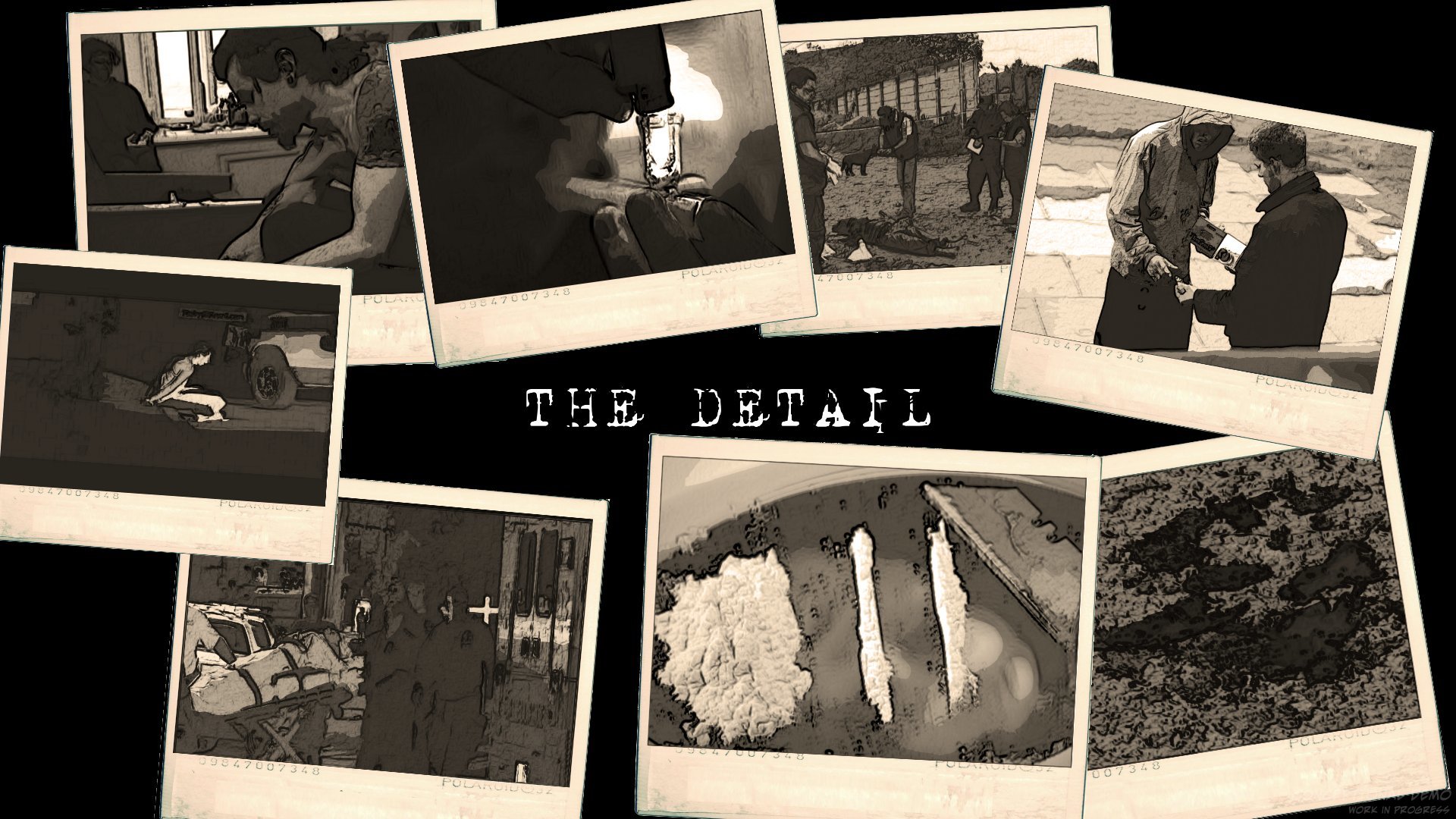
Just as gamers come in all different shapes, sizes, interests and abilities, so do developers and the games they create. From a gritty, graphic novel-style detective mystery to a lighthearted audio-only text romp through King Arthur’s England, no two games more clearly demonstrate just how different interactive storytelling experiences can be than The Detail and Grail to the Thief. Neither game has much in the way of puzzles, each placing the focus squarely on their respective stories, but the way they’re told couldn’t be any further apart. The devil is in the details.
The Detail
Evan Dickens
Finnish developer Rival Games has arrived on the adventure scene with no shortage of ambition. They claim the episodic series they are creating is nothing less than a “new form of entertainment,” aiming to take the dramatic execution of the best television serials and marry it with a graphic novel style of choice-based adventure design. And just in case you had any trouble connecting the dots as to the audacity of their boast, the marketing materials for The Detail spell it right out: This game is “where Telltale’s The Walking Dead meets HBO’s The Wire.” It doesn’t get much grander than that—merging a modern genre-defining adventure game with the storytelling chops of possibly the greatest modern TV drama? How can you go wrong?
On the first front—the emotionally charged, morally ambiguous police drama storytelling of The Wire—the first episode, bleakly subtitled Where the Dead Lie, is moderately successful. The game pulls no punches right off the bat, beginning with a police raid on the apartment of a sexual predator and the subsequent violent confrontation. This sequence introduces us to the first of two main characters: aging, hard-boiled detective Reggie Moore, who owes his personality (and his receding hairline look) to Dennis Franz’s immortal Detective Andy Sipowicz.
After Detective Moore and his partner investigate the scene of an apparent mugging that has gone horribly wrong, the game transitions to the perspective of the other player-character. Joe Miller is a former crook who is attempting to turn his life around and raise a young daughter, but is continually forced back into “the life” by the police to utilize his skills and contacts to assist in investigations.
The dialogue can be pretty hammy, with the relentless cynicism and authority-griping of the twice-divorced Detective Moore being lifted straight out of mainstream 1980s cop dramas. It’s not exactly the grey ambiguity that made shows like The Wire or The Shield so consistently emotionally wrenching, but it’s competently written and ends with a brutally noir-ish cliffhanger as the events of the episode converge on Joe Miller’s personal life.
The half of the equation that really doesn’t live up to the advance billing is the comparisons to The Walking Dead, because The Detail generally fails to offer meaningful narrative choices. In fact, I feel like I’m straining to even classify this as a choice-based adventure. Within the episode’s 90-minute playtime, there are some clearly Telltale-inspired moments of decision-making within confrontations, but the actual story branches are not natural. When the story does split in a potentially meaningful way, the overly simplistic interface offers not much more than a two-option pop-up menu. One example late in the game involves clicking one of two doors to decide which bad guy you’ll follow in pursuit. This is not exactly a subtle, morally dubious choice; it’s more a coin-flip—and ultimately a useless one at that, as the game itself chose to go down the opposite stair from what I clicked on anyway.
In the few exploration scenes between lengthy cutscenes and dialogue sequences, The Detail functions as a traditional point-and-click—albeit with zero inventory interaction or puzzles. The character-switching has no real impact on the gameplay, but as Detective Moore there are a couple moments of minor detective work when your character has gathered enough information from evidence to draw conclusions as to how to proceed. These require almost no mental exertion other than being careful to click all available hotspots, however. In fact, though it is built on a familiar screen-to-screen adventure engine, Where the Dead Lie uses its traditional adventure scenes primarily as a bridge between its comic-stylized cutscenes, which are clearly the focus point.
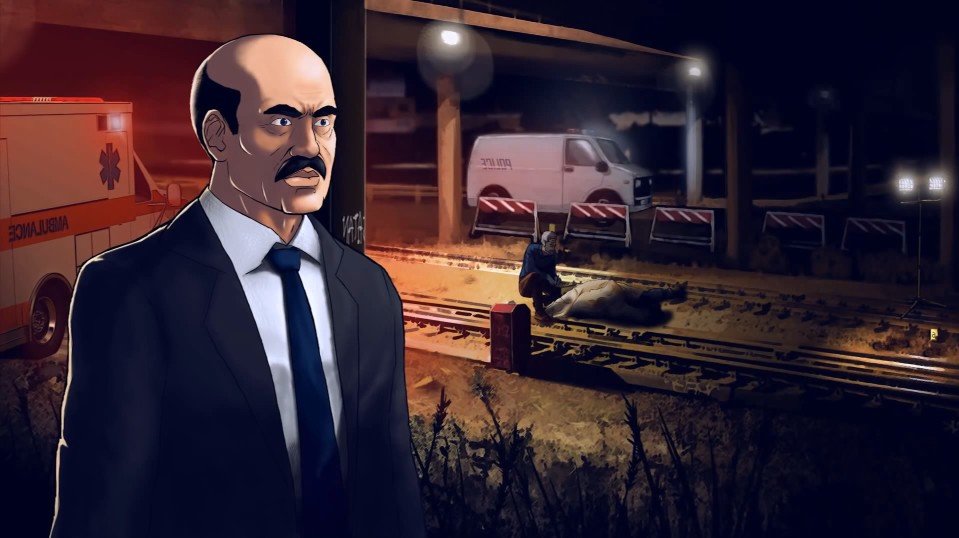
The desire to create a “graphic novel style” experience extends to the technical decisions as well. The game features no voice acting at all, nor any real sound effects. Instead, many effects are represented by over-sized verbal representations such as “CRACK!” in true retro comic style. The atmospheric music score is one of the game’s strong points, but the lack of voice acting is jarring in a game where the emotion of the dialogue is so essential.
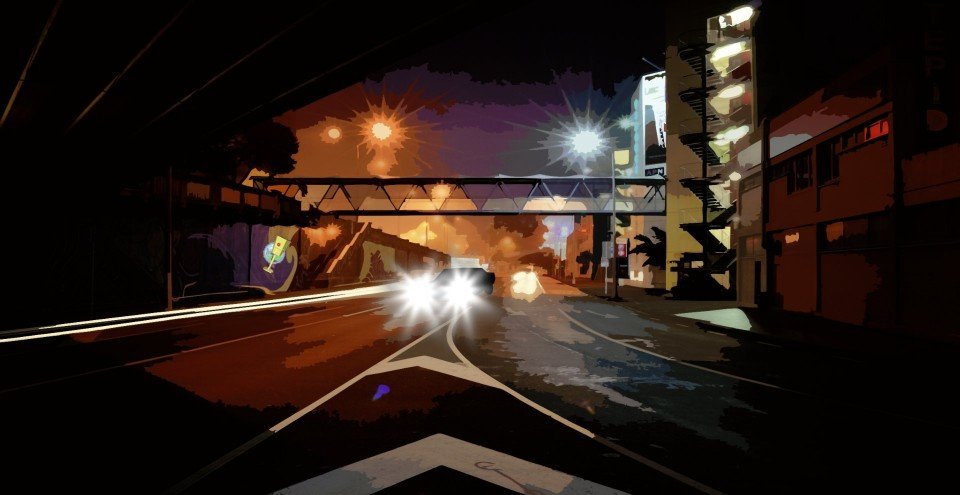
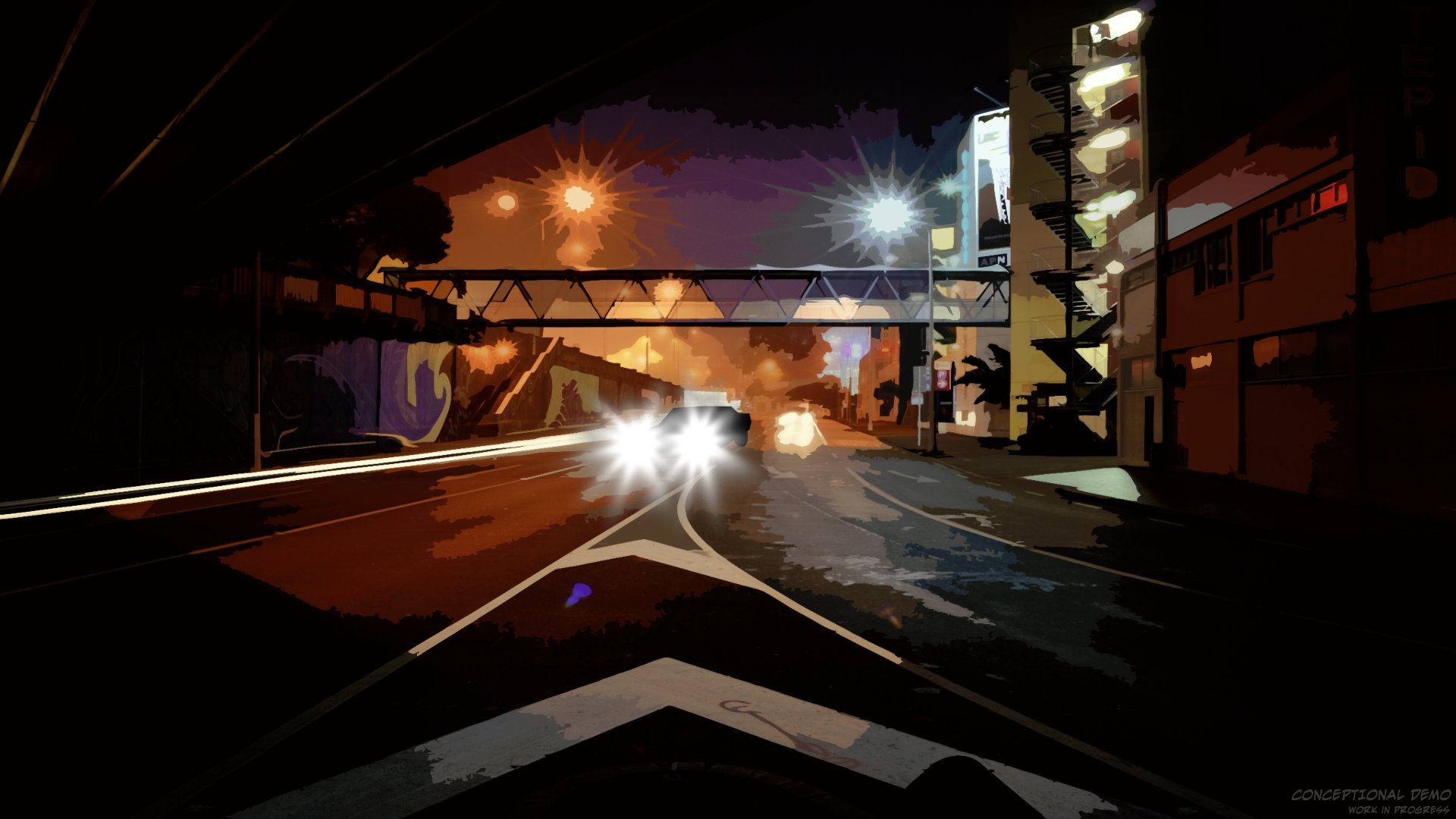
The frequent close-ups and cutscenes make use of a very strange and disjointed animation style. Multiple scenes are drawn in stark black and white silhouettes that use large sprites sliding across the screen as “animation.” This is a reasonable low-budget solution that places the emphasis on dialogue and story, but other graphical elements are mediocre at best. Though there are some interesting visual effects using rain and shadows, the hand-painted backgrounds are bland and seem to be deliberately drawn in a muddy, less detailed style. In the exploration scenes, the walking animation is really awful, as the characters often seem to slide across the screen much faster than their walking legs should be taking them.
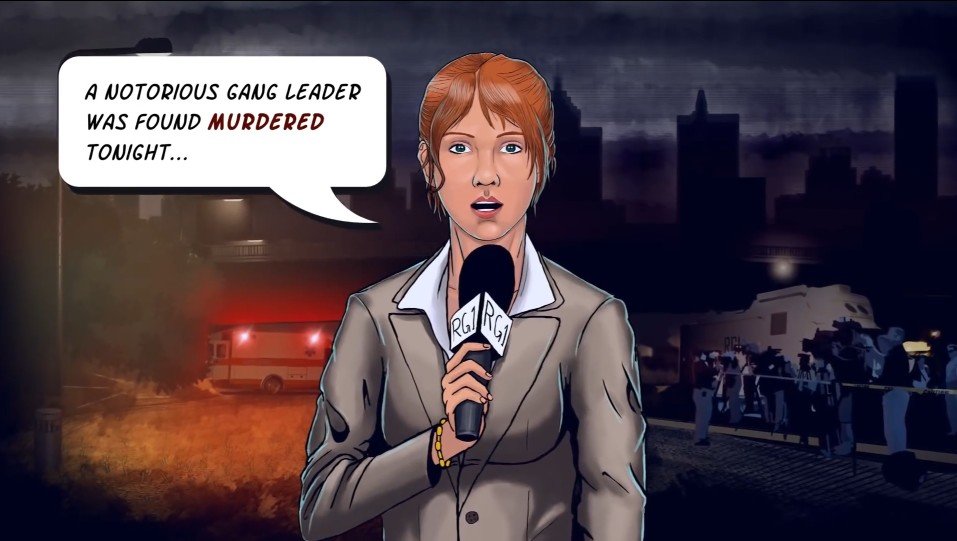
An aesthetic that emphasizes storytelling and dialogue isn’t a bad idea in itself, but Where the Dead Lie unfortunately doesn’t have the dialogue depth so far to transcend cop-and-bad-guy clichés. Really it couldn’t accurately be described as an adventure in any case—its strict adherence to a single narrative thread, with minor short-term deviations along the way and a style that feels more like a distantly read Choose Your Own Adventure book than an organic player-controlled story, make this more accurately categorized as interactive fiction than a real game. The Detail is a story with some potential, but quite a bit of polish will be necessary in future installments to reach the heights of either of its stated influences.
Latest Gaming Articles
All Articles